
When did the letter U enter the alphabet? It will surprise you.

There was no letter U in the alphabet. Well, that’s not the entire story. There was the sound for the letter we call U, but it didn’t look like U. It looked like V. The Classical Latin alphabet had only 23 letters, not the 26 that we have today. (This is why the W looks like a double V but is pronounced like a double U. Learn more about the history of W here.)

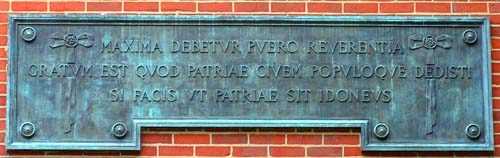
For a very long time, U and V were allographs. What’s an allograph? An allograph is a variation of a letter in another context. Uppercase and lowercase letters are allographs. Before the use of the letter U, the shape V stood for both the vowel U and the consonant V. In the picture below you can see the letter V used in places were it would be pronounced as a U.

The letters begin to look different in the Gothic alphabet in 1386; however the use of the u was not widespread. When scribes did use a u, it was in the middle of words, e.g. save was saue, but upon was vpon. It wasn’t until printing standardized letter shapes in the 1600s that the letter U became regularly used. First, in the 1500s, Italian printers started distinguishing between the vowel U and the consonant V. However, the V continued to be used for the U sound at the beginning of words. In 1629, the capital U became an accepted letter when Lazare Zetzner, a printer, started using it in his print shop.

The letter Z was almost removed from the alphabet. Read Z’s story here.

Covld you still read if we vsed v for u?
Whatever fate awaits the experimental disciplinary rules at Congress this weekend, it has managed to forge a significant road-map for the future of the way Gaelic games are played.

Irish Independent (Dublin, Republic of Ireland) April 15, 2009 Leap of faith needed for rules to get real chance Whatever fate awaits the experimental disciplinary rules at Congress this weekend, it has managed to forge a significant road-map for the future of the way Gaelic games are played.

Requiring a two thirds majority may be a step too far, even as the votes come pouring in from counties who ordinarily might have expected to err on the side of caution in this instance.

However, quite clearly, it has exercised minds and thinking on the more sinister elements that have crept in to Gaelic football and hurling over the last number of years.

The task force charged with putting this effort together over the last 16 months or so may not be interested in moral victories, but they already have one. And by Saturday evening, they may have a concrete victory that few could have predicted at the outset.

> ESSENTIAL> They have sold it hard and they have sold it well, but while a decent sales pitch about the importance of change was essential this time, as opposed to four years ago, it hasn’t been the vital ingredient in such a groundswell of support that was apparent last week.

Counties are leaning towards change because they understand that some change is required to remove cynical elements from the game.

Last year’s All-Ireland football final between Tyrone and Kerry was a beautiful spectacle, but in between the quality and excitement there was a cynical undercurrent that went largely unpunished on the day.

It’s hard to agree with those who contend that the rules were fine the way they were; harder still after watching some of the games that unfolded in this year’s League campaign. site act question of the day

It was wholly anticipated that a raft of managers would eventually rail against the proposals. And yesterday the Gaelic Players’ Association (GPA) released the results of their findings from a text poll which suggested that 82pc of those polled did not trust that the new rules would be applied consistently. Naturally, players and managers are frightened of the consequences of being on the wrong side of a decision. Sure they are the major stakeholders in the game, but they must also understand that they don’t have the monopoly of knowledge on how it should be played.

Some managers took longer than others, but eventually the message was communal — players wouldn’t tackle again, the physicality would be taken out of the game, referees wouldn’t be consistent enough from week-to-week and game-to-game and there was nothing wrong with the rules in the first place. web site act question of the day

Jack O’Connor raised an interesting point earlier this week when he suggested that players would be reluctant to tackle at all after picking up a yellow card, but if they learn to tackle right then there shouldn’t be a problem.

But consistency in application by referees remains the biggest concern and it was quite in evidence, particularly in the latter stages of the League, how some referees, more so in hurling, had diluted their enforcement of new rules.

Passing the rules is a huge leap of faith by the GAA that will bring enormous change, more so at club level next year than anywhere else. The greatest stage for the experiment would be a season of championship action itself to test their properties in the white heat of intense battle. But under rule, this is not possible so a huge leap of faith is required.

Most of the designated yellow card offences are black and white. If a player trips an opponent by foot or hand it’s clear what his intention is — it is cynical attempt to stop an opponent. Does the perpetrator deserve to stay on the field having committed such an act?

QUESTION> That is the question each delegate to Congress has to ask themselves. And if they don’t deserve to stay on the field, does the team deserve to suffer? That is the core principle of the proposals before them.

Similarly a body check or third man tackle can’t be dressed up as anything other than what it is; even in the last split second a player can make a genuine attempt to avoid contact.

Wisely the task force has removed the wrestling of an opponent to the ground from their list of yellow card offences on the basis that the victim can potentially suffer the same fate as the aggressor.

Remonstrating with an official has resulted in the least amount of yellow cards during the League and subsidiary competitions and that message seems to have got through more than any. By championship time, that may be different, but it should remain a yellow offence.

The greatest ambiguity lies in the two remaining offences that have merited yellow under the experiment — pulling down an opponent and grabbing an opponent around the neck with arm or hurl. It’s here that referees must exercise the most discretion, here that the greatest difference of interpretation lies.

It was in evidence on the night that Dublin and Tyrone met in the floodlit game in late January when corner-back Michael Magee survived his execution of a high tackle on Conal Keaney. Good judgment was exercised that night and that game remains the perfect template for how the rules can really work.

Author: Hot Word | Posted in alphabet | Tags: latin alphabet, the letter u, the letter v
132 Comments
Tyson on April 9, 2012 at 11:49 am

Typo in the first paragraph, forgot the word “look”
Fun info though, thanks for the continued education, this is one of the only approved sites at work so it keeps me entertained

John on April 9, 2012 at 11:55 am

If we vsed V instead of U it would be kinda (well mostly) confusing. :D

Someone on April 9, 2012 at 11:59 am

I think it wovld be very hard to, bvt I covld get vsed to it!

John on April 9, 2012 at 12:00 pm

Actually it would be just confusing.
It would be like if someone passed you a note saying something like…
“Wovld yov want to go to the aqvrirum with me?”
Just plain confusing, but this article was intresting. :P :) :D

Yoho Mateys! on April 9, 2012 at 12:02 pm

This would be confusing! :P

Cody on April 9, 2012 at 12:03 pm

That’s really interesting. I have read many literary works that used “v” for “u,” and I always wondered why they did that. Thanks to whoever wrote this!

Phlondar on April 9, 2012 at 12:08 pm

Nice!

Rilatos on April 9, 2012 at 12:13 pm

Very interesting.

Rilatos on April 9, 2012 at 12:15 pm

I could still understand if we used V for U.

Dara on April 9, 2012 at 12:27 pm

I study latin but I never knew that “u” didn’t exist – probably because it’s now standardized for instance there is a u in “aula”. I know that when there is a V in latin when you see a V you pronounce in “W” like “vulnus” is pronounced “wulnus”. But V and U are different letters in Latin or at least I thought so

NIna on April 9, 2012 at 1:08 pm

wow that is weird covering a v instead of a u???????????????????????

Mackenzie on April 9, 2012 at 1:19 pm

In covld you still read if we vsed v for u……the you covld havae been yov.

What’s the story abovt W, dictionary.com?
yov pronovnce it dovble u, when some people write it like dovble v?
That wovld be a good Hot Word.

While typing this, I realized I vse the letter u in my sentences a lot. Well, everybody does. I thovght u wasn’t vsed as much as a or e, which is trve…

V instead of u for life!!!!!!!!

Kt on April 9, 2012 at 1:53 pm

@John, I beg to differ. It’s sort of like vowels. For example, A can be pronounced like the a in name, or it can be pronounced like the a in announcement. Ay and ah. It’s the same inception with the v and u.

megaman on April 9, 2012 at 1:53 pm

would yov like this thing cavse i wovld not like this.

Kt on April 9, 2012 at 1:56 pm

*concept, not inception. Curse you, automatic spell checker!

Aemy on April 9, 2012 at 2:00 pm

We should get rid of X….
and either E or I …..and C
We have a lot of unnecessary letters in English.

Ray on April 9, 2012 at 2:05 pm

So, the Roman V (‘vee’) was like the Greek Ω (‘oh/Uu-mega’) which was like the Hebrew ו (‘waw’), but leaning toward the Hebrew ב (‘veth’).

Okay.

Note also that capital B is like a sideways W (‘double-U’ not ‘double-V’) with a cap-bar on the leading side, and pronounced likewise capped, And M is like upside-down W.

So, Why didn’t the Romans do a W like their B and M?

LOL on April 9, 2012 at 2:10 pm

so like, the color purple would be Uiolet… what if Violet was your name… that would stink

R Cain Tawpick on April 9, 2012 at 2:16 pm

Texting is like a new language. We use u for you and r for are. Why would v and u be confusing? That said, it would be more annoying than hives.

hi on April 9, 2012 at 2:18 pm

hi

hi on April 9, 2012 at 2:22 pm

I thovght this article was pretty interesting. I never knew this stvff. Now I want to read the article abovt the letter Z and how it covld’ve disapeared.

Oh and BTW, I totally agree with Mackenzie.

BTW, my name really isn’t “hi”. LOLZ =D XD :P

Quinn on April 9, 2012 at 2:52 pm

i really enjoy the hot word blog. but i must ask what of the ancient greek alphabet? it had U while it did not have V. you may ask what significance this has well english is from latin and latin is from greek. the upsilon had a place in ancient greek while the V did not so where did the V get phased in as the U was in some form of limbo

Mike on April 9, 2012 at 2:57 pm

The info reminds me of an instance In Flannery O’Connor’s Wise Blood. Enoch Emery, a country yokel, sees the word “museum” etched into the facade of the local museum as MVSEVM, and reads it aloud as “muv see vum.” So for at least one literary character, the loss of the “u” was confusing.

Katie on April 9, 2012 at 3:03 pm

Actually, if we still used V instead of U it wouldn’t be confusing at all; the reason being that we would all be used to using the letter V.

killa-king1 on April 9, 2012 at 3:09 pm

what I dont get this?

[...] When did the letter U enter the alphabet? It will surprise you. The Hot Word | Hot & Trending Wo…. Share this:TwitterFacebookLike this:LikeBe the first to like this post. [...]

Nov on April 9, 2012 at 3:28 pm

It wovld be a bit odd at first, bvt I covld get vsed to it. Perhaps if I had more time to try it ovt I covld give a more definite answer.

I vse Google Chrome, and the spell check is telling me that the words with v’s are misspelled. Stvpid sqviggly red lines.

tailor on April 9, 2012 at 3:38 pm

awesome experiences ever!!!!!!!!!!! :)

Mackenzie on April 9, 2012 at 4:17 pm

Thanx hi! thanx for copying my “v instead of u for life!!!!!” theory…..i know ur name isnt hi, who’s name is hi anyway?

R Cain Tawpick, texting is like a new language but we only abbreviate stuff like LOL for laughing out loud or TBH for to be honest. so v and u might be confusing for texters who just started texting…..
Fleur Delacour (from harry potter; has a thick accent) says, “‘Ow ‘orrible (how horrible..) and “Ve are going” (we are going)
when you phonetically write Fleur’s little language out, v is used wayyyy more often than u.
not that i dont agree with u, i probably just confused you too much. Im just looking from a different point of view.

Cyberquill on April 9, 2012 at 4:27 pm

I have an inflamed vvvla, and my girlfriend has a sore vvlva. I wonder if both are cavsed by the same bvg, and if so, whv got if from whv.

Lu-Lu on April 9, 2012 at 4:29 pm

ooooh well we’ll have to get vsed to it bvt it wovld be strange and my name wovld be strange it wovld be Lv-Lv

Jo on April 9, 2012 at 4:34 pm

Wow. And I always wanted to live back in that time-period. I remember reading something like that when u and v were interchangable back then. No wonder people didn’t read in the 1300’s, it was too hard!

Bridgette on April 9, 2012 at 5:07 pm

Actually, it would be pretty interesting if we still didn’t use the letter “U”. Thank God we have it now though.

Sporty Chic on April 9, 2012 at 5:29 pm

I fovnd this V vs V thing very confvzzling. VVVVVVVVVVVVVVVVVVV
:)

DJS on April 9, 2012 at 6:22 pm

Actually, in Japanese, which doesn’t have a V sound, they add marks to their U character to vocalize it in order to replicate (as well as they can) the V sound in foreign names. So phonetically there is clearly a very close relationship between the two sounds.

DuQuattro on April 9, 2012 at 6:23 pm

How would it be possible to spell “uvula”?

vv vv vv vv vv haha those r v's on April 9, 2012 at 6:26 pm

vncle mvrry vttered vnderstandable vvords bvt yov mvst vunderstand

vv vv vv vv vv haha those r v's on April 9, 2012 at 6:29 pm

vroom vroom vvvvvvvvvvvvvvvvvvvvvvvvvvvvvvvvvvvvvvvvvvvvvvvvvvvvvvvvvvvvvvvvvvvvvvvvvvvvvvvvvvvvvvvvvvvvvvvvvvvvvvvvvvvvvvvvvvvvvvvvvvvvvvvvvvvv vvvvvvvvvvvvvvvvvvvvvvvvvvvvvvvvvvvvvvvvvvvvvvvvvvvvvvvvvvvvvvvvvvvvvvvvvvvvvvvvvvvvvvvvvvvvvvvvvvvvvvvvvvvvvvvvvvvvvvvvvvvvvvvvvvvvvvvvvvvvvvvvvvvvvvvvvvvvvvvvvvvvvvvvvvvvvvvvvvvvvvvvvvvvvvvvvvvvvvvvvvvvvvvvvvvvvvvvvvvvvvvvvvvvvvvvvvvvvvvvvvvvvvvvvvvvvvvvvvvvvvvvvvvvvvvvvvvvvvvvvvvvvvvvvvvvvvvvvvvvvvvvvvvvvvvvvvvvvvvvvvvvvvvvvvvvvvvvvvvvvvvvvvvvvvvvvvvvvvvvvvvvvvvvvvvvvvvvvvvvvvvvvvvvvvvvvvvvvvvvvvvvvvvvvvvvvvvvvvvvvvvvvvvvvvvvvvvvvvvvvvvvvvvvvvvvvvvvvvvvvvvvvvvvvvvvvvvvvvvvvvvvvvvvvvvvvvvvvvvvvvvvvvvvvvvvvvvvvvvvvvvvvvvvvvvvvvvvvvvvvvvvvvvvvvvvvvvvvvvvvvvvvvvvvvvvvvvvvvvvvvvvvvvvvvvvvvvvvvvvvvvvvvvvvvvvvvvvvvvvvv vvvvvvvvvvvvvvvvvvvvvvvvvvvvvvvvvvvvvvvvvvvvvvvvvvvvvvvvvvvvvvvvvvvvvvvvvvvvvvvvvvvvvvv vvvvvvvvvvvvvvvvvvvvvvvvvvvvvvvvvvvvvvvvvvvvvvvvvvvvvvvvvvvvvvvvvvvvvvvvvvvvvvvvvvvvvvvvvvvvvvvvvvvvvvvvvvvvvvvvvvvvvvvvvvvvvvvvvvvvvvvvvvvvvvvvvvvvvvvvvvvvvvvvvvvvvvvvvvvvvvvvvvvvvvvvvvvvvvvvvvvvvvv vvvvvvvvvvvvvvvvvvvvvvvvvvvvvvvvvvvvvvvvvvvvvvvvvvvvvvvvvvvvvvvvvvvvvvvvvvvvvvvvvvvvvvvvvvvvvvvvvvvvvvvvvvvvvvvvvvvvvvvvvvvvvvvvvvvvvvvvvvvvvvvvvvvvvvvvvvvvvvvvvvvvvvvvvvvvvvvvvvvvvvvvvvvvvvvvvvvvvvvvvvvvvvvvvvvvvvvvvvvvvvvvvvvvvvvvvvvvvvvvvvvvvvv

vvvvvvvvvvvvvvvvvvvvvvvvvvvvvvvvvvvvvvvvvvvvvvvvvvvvvvvvvvvvvvvvvvvvvvvvvvvvvvvvvvvvvvvvvvvvvvvvvvvvvvvvvvvvvvvvvvvvvvvvvvvvvvvvvvvvvvvvvvvvvvvvvvvvvvvvvvvvvvvvvvvvvvvvvvvv vvvvvvvvvvvvvvvvvvvvvvvvvvvvvvvvvvvvvvvvvvvvvvvvvvvvvvvvvvvvvvvvvvvvvvvvvvvvvvvvvvvvvvvvvvvvvvvvvvvvvvvvvvvvvvvvv vvvvvvvvvvv vvvvvvvvvvvvvvvvvvvvvvvvvvvvvvvvvvvvvvvvvvvvvvvvvvvvvvvvvvvvvvvvvvvvvvvvv

very sqvigily linezzz

Nicky on April 9, 2012 at 7:03 pm

I am pretty sure that most people would be sad if the letter U got kicked out.

Do u agree with me anyone?????

Lol Pickle Juice on April 9, 2012 at 7:06 pm

The title of this should be ” I Miss V” Or ” I Miss U” Lol

Mate on April 9, 2012 at 7:36 pm

hi guys i really like this current alphabet then that!!

Mate on April 9, 2012 at 7:37 pm

hello wovld you like to see the vnderworld aqvarivm with me?

someone like you on April 9, 2012 at 8:29 pm

this is interesting. lol!

Fernando on April 9, 2012 at 8:30 pm

It was quite interesting.

Jessie on April 9, 2012 at 10:18 pm

My BFFL said “I can’t believe V is after U in the alphabet!” and I said “Why?” She said “Read a dictionary, and what’s my name?” I said “Sorry Violet :) ” She can be a drama at times, then i told her this info (emailed it to her) and she wrote back, “See what I mean Jessy?” I usually keep giving her an evil glance (in a nice way though) and we both end up laughing :D

I win on April 9, 2012 at 10:32 pm

Think it’s stupid like who beable to read it, you’d get confused

I win on April 9, 2012 at 10:34 pm

who would use it like that+-+ =)

FJ on April 10, 2012 at 12:29 am

Ahh, maybe one example is the ‘Bvlgari’ which is, as we all pronounce, ‘Bulgari’. :D

Rustgold on April 10, 2012 at 12:45 am

You want confusing, old Arabic only had 8? letters (could have been 6) which were unique to itself. God’s breakfast, or Dog’s breakfast, or even Bog’s breakfast, that’s something which was/is impossible to know.

babak on April 10, 2012 at 1:02 am

its better to change U to V,and go back before birthday of U,haha

Hyatt Lam on April 10, 2012 at 1:19 am

In my university there was a historical gate with the sign reads “VNIVERSITY OF HONG KONG” and all freshmen were told a ghost story about it… something like the people got killed by Japanese changed the letter U to V after they died…
But the university started in 1887 so the letter U should be introduced by that time according to this article, so maybe it was the ghost who did it.

Sue on April 10, 2012 at 5:02 am

In French the W is pronounced “doo-bleh veh”

matt b on April 10, 2012 at 5:55 am

cool.

matt b on April 10, 2012 at 6:00 am

up up and away

matt b on April 10, 2012 at 6:01 am

awseom

joey on April 10, 2012 at 6:01 am

lol

hello on April 10, 2012 at 6:02 am

up up and away

hell on April 10, 2012 at 6:02 am

hi

Donna Hatch, historical author on April 10, 2012 at 6:55 am

I knew V was used for U in printing and engraving because the roundness of the u was too hard to make with their tools, but I thought U was handwritten as a U. Cool trivia. Glad it’s standardized now–English is confusing enough (just listen to a child or a foreigner try to speak it) without mixing U for V :-) I too think we should ditch X, C and either I or Y.

M. E. S. on April 10, 2012 at 7:03 am

I also stvdy Latin bvt I know enovgh of the medieval times to know abovt this letter. As to what Aemy said, there are many letters, especially “e” or “i,” that have a reason for remaining in the alphabet: there is no other way to create that very specific sovnd.

Thanks, dictionary.com! I look forward to reading yovr new articles. :D

Confucious on April 10, 2012 at 7:37 am

It would sure make words like “uvula” and “chauvinist” more difficult to decipher ;)

THELETTERU | BLOGCHI@mayopia.com on April 10, 2012 at 7:54 am

[...] ‘Rune’ with a VU — or absence of V — With simply ‘the letter U’ — We’d truly be lost without U — Sarcasm withholding — The Vulpine Lox and [...]

Chad on April 10, 2012 at 8:08 am

Goodbye, mind. YoV’ve been bloVVn.

Gma on April 10, 2012 at 8:23 am

How about the Hawiian lanquage that uses the Latin pronunciation for the vowels. A, E, I ,O and U are pronounced ah, ae, ee oe, oo (as in cool) and the w is pronounced /v/ like Hava’ii.

Rashad on April 10, 2012 at 8:29 am

I think that it wovld be very confusing caves yov wouldn’t know if it was a consonant or a vowel

Kevin Martin on April 10, 2012 at 8:45 am

This article is very cool. It’s nice to know this information. Language is interesting.

asibi on April 10, 2012 at 8:47 am

i think it will be confvsing becavse we have been vsing the letter u insted v,if we were vse to the letter v, it wovldn’t be as confvsing…it wovld be interesting to see how the vse of v,wovld look like

Liza with a Z on April 10, 2012 at 9:12 am

I still think of Mel Brooks’ “History of the World” when Ron Carey is talking to Mel Brooks (in the Roman period of the movie) and and says, “You’re nuts. N.V.T.S. Nuts.”

mary torres !so chula! on April 10, 2012 at 9:27 am

lol hi

Crystal Glittergal on April 10, 2012 at 9:42 am

WOW I REALLY CARE
-GLITTERGAL -..-

James Hutchings on April 10, 2012 at 10:26 am

Why did the ‘u’ and ‘v’ sounds have the same letter? They don’t sound particularly like each other.

CARL on April 10, 2012 at 10:32 am

DID NOT FIND WHERE TO PRINT A WORD TO FIND IN THE THESAURUS?

hi on April 10, 2012 at 11:18 am

:)

Reese Nicholle on April 10, 2012 at 11:24 am

It seems like it would just confuse a lot of people today probably because of the fact we are use to spelling the things we do now. If things never changed then I’m pretty sure we would catch on to it just like how we caught on to spelling today… This is by far the most interesting thing I’ve read yet. (:

drjill on April 10, 2012 at 12:18 pm

I’ve been working on a newer (than 1795) history of my home state, and read long S (they look like italicized, low case “f”) and “u” for “v” in every volume of the hundreds of long out of print volumes I’ve used researching the state. By extension, Readers, now you know why a “W” looks like two “Vs” and “I” looks like “I” – but isn’t. It’s a “J.” Without keyboards, it’s even more obfuscating. In the 1600s, England was much ‘closer’ historically to the 1066 A.D. invasion of Wm. the Conquerer, and the imposition of French, so there’s no surprise at Anglo-Saxon words having way more “ou” combinations than early Colonists here were willing to tolerate. Do me a favor: do a Brit a favour. We live in neighborhoods: Brits live in “neighbourhoods.” As for “long Ss,” don’t bother to try to figure out why sometimes a double ff (which looks like double ffs) is in the middle of a sentence, or at the end, OR (worse yet!) combined w/one “regular, familiar “s” next to a “long s” that looks like an “f.” There’s IS no rule regarding what to use when or where, or whether to mix ‘em up! Beyond the Revolutionary War, the word, Congress, may have looked like Cogresf, Congreff, Congress, or Congrefs. They’re all spelled C O N G R E S S,but you’ll likely find the English and American-English world spelling it with one form of “s.”
Now, let me tell you about a real double “f” starting someone’s name, instead of a high case, “F” It wasn’t SPOKEN as a “double low-case ‘f’” – but it was commonly written that way. It’s a ‘place,’ so to speak, where what looks like a “long S” is actually a double low-case F. To my knowledge, like the long “Ss” that look like italicized “Fs,” there’s no rule about when to use low-case “ff” and when to use a solo, high-case, “F.” There are oodles more changes in the very letters we use today, that are relatively new. It’s fascinating stuff… Written language is as fluid and ever-changing as are simple words and expressions whose meaning today is very different than they were one or two centuries ago. But that’s quite enough for one sitting, eh? It’s fascinating stuff! You should see how the British mangled the calendar! But that’s another bit of language detail that will have to wait for a Dictionary.com excuse to share…

babyruth47 on April 10, 2012 at 12:50 pm

ok

Purpletastic on April 10, 2012 at 1:31 pm

Wow! This wovld be very confvsing, don’t yov think?Its like yov wovld have to think abovt what yov’re reading when youv’re abovt to read a word or sentence with a u or v.
Like, “Hmm is it Vtopia or Utopia?” OR “Hold up. Is it Svmmer or Summer?OMG THIS IS MUY DIFICIL!!!!”
yeah… and just THINK about the computer going wacko with all the spell checks.

Anonymous on April 10, 2012 at 3:02 pm

Well, the letter that used to be an allograph of u has fallen off my keyboard! So if we always used that letter, e_eryone would get really confused, because there would be loads of ranomd underscores in the sentence, that is if I was typing at that time.

Jvne Jvne on April 10, 2012 at 3:10 pm

First of all, wow, lots of comments for a single day, but this is very interesting…yov have to think abovt how confvsing it would be….if there was a word yov didn’t know, wovldn’t it be hard to tell what the word and its pronovunciation was? :) Thanks, cool information. Not going to say it was entertainment (Tyson) but it’s fascinating…and as an Author, I don’t agree with Donna Hatch. _(I) wovld hate not hav_(i)ng any letter, even if it’s not an e_(x)tremely necessary letter, svch as when “c” and “k” make the same sovnd…
PS i keep pvtting “U” instead of “V”! See how we need all letters?

purellstine on April 10, 2012 at 3:15 pm

June, u commented…and im gonna be a critic….some comments dont make sense?

Aishwarya Rai on April 10, 2012 at 3:17 pm

Very interesting…this is a nice article :)

that person on April 10, 2012 at 3:21 pm

lol so fun to do but like confusing in alo of ways like:

yov covld yov be nice and go ovt with me so we can do the vndersatdment thing together =P

caroline on April 10, 2012 at 3:22 pm

that wovld be weird and confvsing
i wovld hate it!!!!!!!!!!!!!!!

Manuel on April 10, 2012 at 4:47 pm

It would make it very hard to figure out how to pronounce vuvuzela..

hhui on April 10, 2012 at 5:24 pm

cool

Vicky on April 10, 2012 at 5:28 pm

This was so mvch fvn to read! Thanks!

Vicky on April 10, 2012 at 5:28 pm

:iconsmiley:

maya selote on April 10, 2012 at 6:12 pm

i think that it would be very confusing to tell which words contain a v, and which words contain a u.

R Cain Tawpick on April 10, 2012 at 6:26 pm

@Mackenzie
I have no idea what you are talking about :)

@Cyberquill
**eeyew**

Peiris on April 10, 2012 at 8:29 pm

interesting indeed! So the U came into being proper after 1629!

Somebody on April 10, 2012 at 9:12 pm

The chinese pinyin system has a similar thing. When yov type the word 女, yov have to type in “nv” instead of “nu”! Confvsing, but I wovldn’t mind it! Bvt think abovt having to remake all the keyboards and dictionaries, and laptops in the world jvst to remove the “u”! And we wovld have to text the word yov instead of a simple u!

Thebestnameintheworld on April 10, 2012 at 10:12 pm

;) ;) ;)

DHH on April 10, 2012 at 11:00 pm

I wovldn’t mind cavse I read so fast my brain avto-fills certain gaps where letters look the same.

IQ on April 10, 2012 at 11:10 pm

“W” is pronounced double “V” in French! :)

Gabrielle on April 11, 2012 at 1:30 am

KAOS IN CE KLASRUM

You must often have thought English spelling is unnecessarily
difficult. Just look at words like Cough, Plough, Rough, Through and
Thorough. The great writer, Bernard Shaw, wanted us to change our
alphabet, and someone worked out this way of doing it.
In the first year, for example, we would suggest using ‘’s” instead
of soft ”c.” Sertianly all students in all sites of the land would
reseive this news with joy. Then the hard ”c” would be replased by
”k,” sinse both letters are pronounsed alike. Not only would this
klear up the konfusion in the minds of spellers, but keyboards
kould all be built with one less letter.
There would be great exsitement when it was at last announsed
that the troublesome ”ph” would henseforth be written ”f.” This
would make words like Fotograf twenty per sent shorter in print.
In the third year publik interest in a new alfabet kan be expekted
to have reatshed a point where more komplkated tshanges are
nesessary. We would suggest removing double leters whitsh have
always ben a nuisanse and a deterent to akurate speling.
We would al agre that the horible mes of silent ”e’s” in our
language is disgraseful. Therfor, we kould drop thes and kontinu to
read and writ merily along as though we wer in an atomik ag of
edukation. Sins by this tim it would be four years sins anywun had
used the leter ”c,” we would then sugest substituting ”c” for ”th.”
Kontinuingcis proses year after year, we would eventuali hav a
reali sensibl writen languag. After twenti years wi ventyur tu sa
cer wud bi no mor uv ces teribl trublsum difikultis. Even Mr.
Yaw wi beliv wud be hapi in ce noleg cat his drims finali kam tru.

v on April 11, 2012 at 3:21 am

very nice ya
add more of the pvzzle-like for vs to solve!!:)

k.g.parthasarathy on April 11, 2012 at 3:59 am

We find these changes and innovations only after the etymologists found after long researches. If they had not done the researches and found the yester year usages as confusing or not correct and evolved the current usages we would not have any confusion. I mean the general public. We would be following the the olden usage with ease. We would not find any confusion. Because of the innovations we compare the old usage with modern usage and get confused. What happened to Queen’s English.. Will any body understand it now? It is still . I am 75 nowworst after computer English and mobile phone English. There are chances for more changes and more confusions for elderly persons.I am 75 now and have been watching all the changes not only in English but in other languages too.

Milly on April 11, 2012 at 6:53 am

Only approve site @ work…any stroy is great!!!

Sangettzu on April 11, 2012 at 8:11 am

V are U!! – Me is U? – No, U are V! OK U are confusing ME….

tyu on April 11, 2012 at 8:28 am

allllllllllllllsssoooooojmeeeeeeeeeee

Will on April 11, 2012 at 8:33 am

It gets even weirder if you took Greek as a child like i did… the lower case “v” is the equivalent of an “n” in the english alphabet. Of course the upper case is an N…
Always fun to mess around with pronunciations by intentionally using other languages’ rules.

tyu on April 11, 2012 at 8:33 am

now im goona vse all the u with the v

Tai on April 11, 2012 at 8:37 am

Ohgog if we used v instead of u I would read everything with a cheesy count dracula accent c: silly me

d on April 11, 2012 at 8:39 am

s

d on April 11, 2012 at 8:39 am

sssssssssssssssssssssssssssssssssssssssssssssss

Arnaldo B on April 11, 2012 at 9:06 am

Vnbelieuable!

awesome dude on April 11, 2012 at 9:07 am

that is strange how v would take u place

Betty Wilcox on April 11, 2012 at 10:32 am

I doubt if save was saue. You substituted a u for a v, not a v for a u. So, would suave have been svave?

I was told the U was not used on carvings because a V was easier to carve. But that didn’t make sense with all of the other curved letters that were used. This does make sense. Interesting article.

Alicia on April 11, 2012 at 11:53 am

Eh. It’s not really confvsing to me, plvs people wovld get vsed to it after a day or so. It does look kind of medieval thovgh. I actvally really like it, I think it shovld go back to this way with v and u being interchangeble… bvt I gvess u wovld then be completely eliminated for the alphabet.

Well, then we shovld vse w as v and v as u and w and get rid of u =D

I lowe yov! =D

Vyckie on April 11, 2012 at 12:06 pm

so instead of my name being Vyckie it covld haue been Uyckie wow that kinda weird isn’t it. now im gonna start writng like that by making all with u and v like instead “have” it will be “Haue” and “Vse” instead of “use”

Mackenzie on April 11, 2012 at 12:26 pm

R Cain Tapwick,
thanx. i knew it was confusing…..LOL :)

No Name on April 11, 2012 at 12:27 pm

Aishwarya Rai?

Are you the real Aishwarya Rai? Prob not.

jimjams on April 11, 2012 at 1:03 pm

Epik vse of leterz!!!!!!!!!!!!!!!!!!!!!!!!!!!!!!!!!!!!!!!!!!!!!!!!!!!!!!!!!!!!!!!!!!!!!!!!!!!!!!!!!!!!!!!!!!!!!!!!!!
Yov ar osvm!!!!!!!!!!!!!!!!!!!!!!!!!!!!!!!!!!!!!!!!!!!!!!!!!!!!!!!!!!!!!!!!!!!!!!!!!!!!!!!!!!!!!!!!!!!!!!!!!!!!!!!!!
Nis artvkl!!!!!!!!!!!!!!!!!!!!!!!!!!!!!!!!!!!!!!!!!!!!!!!!!!!!!!!!!!!!!!!!!!!!!!!!!!!!!!!!!!!!!!!!!!!!!!!!!!!!!!!!!!!!!!

Joshua on April 11, 2012 at 1:23 pm

Wow! I had no idea abovt this! Thanks for the information, it’s really vnexpecting that they vsed v for u. Really weird, hvh?

Engaged on April 11, 2012 at 4:56 pm

Only hipsters use V’s as U’s

mary torres !so chula! on April 11, 2012 at 6:02 pm

i love you !!!!!!!!

Mackenzie on April 12, 2012 at 2:20 pm

mary torres, mary torres………U ROCK!

Eric Von Zipper on April 13, 2012 at 8:30 am

I didn’t read every comment so I may have missed this observation from someone else: From the description here, there is a very logical inference that the tastes were experienced differently independent of the sounds. When you eat any food, particularly rich or sweet foods, subsequent servings taste different than the original “rush” of flavor. I would suggest the effect is due, at least in part, to the fact that “savory” flavors are more complex and would be noticed first while simply “sweet” flavors are more of the aftertaste that remains when your taste buds are already accustomed to the more complex flavors.

Alice on April 14, 2012 at 4:28 pm

U-V-W-hatever.

mary torres !so chula! on April 19, 2012 at 7:48 am

thank you im am also loved lol :)

KATIE on April 20, 2012 at 6:22 pm

Umm… That’s interesting…

yayRayShell on April 22, 2012 at 3:55 pm

It’s confusing because sometimes you don’t know when to switch to reading it with a v or a u.

BOB IS BOB on April 22, 2012 at 6:06 pm

,;)
HIYA!!! ummm…i think it wouldn’t be THAT confusing but still…
how would people figure out Pneumonoultramicroscopicsilicovolcanoconiosis?

BOB IS BOB on April 22, 2012 at 6:09 pm

has anyone had pneVmonoVltramicroscopicsilicoUolcanoconiosis???
pneumonoultramicroscopicsilicovolcanoconiosis???

emilyw on April 23, 2012 at 10:37 am

wow that is just freaky…i’ve had pneumonia volcanoitis
(just kidding)

Mitchell Rilatos on April 26, 2012 at 12:19 pm

First comment

Lisa Beusch on May 14, 2012 at 5:05 am

I don’t think it would be confusing. You just need a looootttt of common sense

Alfonso Rojo on May 31, 2012 at 5:46 am

It would need not to be confusing. English is worst. Try to read laughter. Now, put and “s’ in front and read again: slaughter.
The first Romans had it easy. There were no exceptions.

sherryyu on June 9, 2012 at 2:51 pm

wow this is very interesting, vsing the letter v to stand in for u

king on July 5, 2012 at 2:03 pm

It wovld be so louely and perfect

LOL on July 23, 2012 at 1:54 am

while reading everyone’s comment where they replaced the letter u with the letter v it actually comes naturally to me that I am able to read this clearly without the need to change the letters back to their original spelling……weird huh?

someone on August 29, 2012 at 7:17 pm

you gotta love dictionary.com. best website in the world.

Leave a comment
Name
Email
Website

Copyright ©  2013 Dictionary.com, LLC. All rights reserved.
About PRIVACY POLICY Terms API Careers Advertise with Us Contact Us Suggest a Word Help