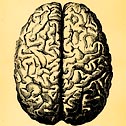
How does your brain distinguish words from sentences?

In English class, your grade does not differentiate between how large your vocabulary is and how well you write a sentence, but new research shows that your brain does. This evidence may mean that increasing your vocabulary does not necessarily influence one’s fluency when learning a new language.

Two parts of the brain, Broca’s area and Wernicke’s area, play a large part in processing language. Broca’s area has been linked to speech comprehension as well as production, and Wernicke’s area is involved in written language and some speech comprehension. Neuroscientists have long known that these two areas communicate because there are two pathways of white matter between them, but how and what the pathways do has been unclear until now.

Associate professor in the Department of Speech, Language, and Hearing Sciences at the University of Arizona Stephen Wilson tested 27 individuals with language impairments due to brain damage. (They’re called aphasias by neurologists.) Wilson used a combination of MRI brain imaging (to determine which particular pathway was damaged) and language assessment tasks (to determine what language deficiencies they exhibited). He found that patients could process different linguistic components based on which pathway of white matter between Broca’s area and Wernicke’s was damaged. Damage to one pathway affected vocabulary and damage to the other pathway affected syntax.

In an interview with the University of Arizona, Wilson says, “If you have damage to the lower pathway, you have damage to the lexicon and semantics. You forget the name of things, you forget the meaning of words. But surprisingly, you’re extremely good at constructing sentences.” About the other pathway, he says, “With damage to the upper pathway, the opposite is true; patients can name things quite well… but when it comes to figuring out the meaning of a complex sentence, they are going to fail.”

There has also been speculation that syntax is a skill that distinguishes humans from other animals who have a basic vocabulary, like monkeys and dogs. However, other evidence of species like songbirds comprehending syntax contradicts those theories.

Do you notice that vocabulary and syntax feel different to you?
An end to open heart surgery; The keyhole operation for a new valve that could mean… Good Health.

Daily Mail (London) March 1, 2005 Byline: MARTYN HALLE OPEN heart surgery could become a thing of the past for thousands of people thanks to a new keyhole procedure performed under local anaesthetic.

Cardiologists are pioneering a technique where a damaged heart valve is replaced through a small incision in the leg.

Currently, replacing a heart valve requires major open heart surgery, a lengthy stay in hospital and six weeks of convalescence. But the new technique can be performed with the patient awake under local anaesthetic. site open heart surgery

The patient is then free to go home the same day.

So far, the technique has been performed on only a handful of patients in America and Europe.

But cardiologists say the results have been so good that, in future, it is likely that all valve replacements will be done this way.

In Britain, thousands of people – many of them in their 60s and 70s – undergo heart surgery each year.

Heart valves tend to calcify (harden) with age, making it difficult for them to open. If that happens, there is an inadequate flow of oxygen-rich blood and the patient starts experiencing breathlessness.

A faulty valve can, however, affect people of all ages. Valve problems – unlike other types of heart disease – are not linked to poor diet, and a valve can simply wear out sooner in some people than in others.

Patients’ symptoms are normally picked up by GPs, who refer them to specialists, but a significant minority don’t get diagnosed in time and their condition deteriorates so much that they become too weak for surgery and die.

All the patients who have so far undergone the new procedure fell into this category and would have died without treatment. this web site open heart surgery

The technique involves pushing a hollow tube called a catheter through the femoral vein in the groin and up towards the heart.

Using a scanner and ultrasound, the catheter is positioned near the diseased valve.

The replacement valve – made of human or animal tissue and mounted on a metal frame or stent – is pushed through the tube with a guide wire until it gets to the diseased valve.

As the new valve is moved into place, the stent pushes the old valve into the wall of the heart, where it remains – without causing any problems – for the rest of the patient’s life.

The cardiologist tests the valve to make sure it is firmly embedded, then the catheter and the wire that guided the replacement is removed and the procedure is over.

After an hour of lying flat on a treatment table, the patient is ready to get up and go to a recovery room. After two days’ rest at home, they can resume normal daily life. The metal frame stays in place.

So far, none of the treatments have been carried out in Britain, but Dr Duncan Dymond, a cardiologist at Barts Hospital in London, says the chance of replacing heart valves without major surgery is very exciting.

‘I have seen videos of very sick patients having this procedure, and after an hour they get up completely rejuvenated,’ he says.

It is far less risky for the patient than open heart surgery, during which the patient is put on a heart-lung machine.

‘Open-heart surgery is a major operation lasting several hours, with a mortality of around 5 per cent and an eight-week recovery period,’ says Dr Dymond.

He says that if full-scale trials are successful, the new procedure will become the norm for all heart-valve patients, possibly within three years.

‘If we could replace open-heart surgery with the cardiologist doing the work in a catheter lab, that would be a major advance. I look forward to the result of the trials.’ Cardiologists are unable to predict which people will develop heart-valve problems, but those with a genetic defect are at greater risk.

Normally, the heart valve has three leaf-like ‘cusps’, which open and close to let blood flow through the aorta (the heart’s main pumping chamber). But 25 per cent of people are born with only two cusps, and these are more likely to be prone to valve problems, says Dr Dymond.

He added: ‘What is important is that if anyone experiences symptoms of breathlessness that are unusual, they should go to their GP. Delaying seeking help could make them so ill that they can’t have an operation.’ HOW IT WORKS Catheter tube fed up femoral artery from groin to heart New valve fed through catheter and located inside faulty valve Mesh around new valve expands, letting valve anchor itself in place and push old valve aside

Author: Hot Word | Posted in grammar, neurology 
117 Comments
Fungible on December 5, 2011 at 4:01 pm

Of course they’re different; I’ve hardly used any complicated words in this sentence and it still makes sense. On the other hand, it would be easy to fill a sentence with obscure words and have the sentence make no sense at all.

ginny on December 5, 2011 at 4:45 pm

Hmm. How very intriguing! I suspect that we will never know everything about the brain.

Mark Leatham on December 5, 2011 at 5:17 pm

I am interested in learning more about the brain and how it works. Where else can i go? Or just send me more things about the brain .

Michael on December 5, 2011 at 5:21 pm

wow.

Prettyorc on December 5, 2011 at 5:37 pm

This is very interesting! Who knew, right? The brain is a wonderful thing.

Damon on December 5, 2011 at 5:37 pm

@Mark Leatham
It is pink and sits in your head

also go here: http://www.google.com

Cheryl on December 5, 2011 at 5:43 pm

If you find this interesting, you might want to read “The Man Who Mistook His Wife for a Hat” by Oliver Sacks. Sacks is a neurologist who recounts many fascinating stories of patients with unusual deficits.

Young-Brezy on December 5, 2011 at 5:49 pm

well put ginny

12Forces on December 5, 2011 at 6:02 pm

Interesting very Interesting

drummer on December 5, 2011 at 6:12 pm

@Mark Leatham,
My psychology class studied the brain a while ago, and we used http://www.psychologytoday.com/ a lot. It actually has some interesting stuff about the brain… also check out http://www.msnbc.msn.com/id/10401930/ns/technology_and_science/t/brain/#.Tt15crJCqU8 for an interactive thing (game isn’t the right word…) that gives a short synopsis of the different parts of the brain. If, after these, you want to go more in-depth, just look up the different aspects and lobes of the brain on a search engine.

Osito on December 5, 2011 at 7:41 pm

This is all very interesting. I love the brain and psychology, even though I still haven’t graduated from high school yet. I actually understand a lot more than your average adult.

Unanimouslyweagreetoanimosity on December 5, 2011 at 7:53 pm

Does anyone know of a disorder which causes one to have a difficulty in remembering the name of an object/idea/etc. in mid-sentence, and sometimes has difficulty with the definition of words, AND has problems with forming their thoughts and emotions into words and sentences, sometimes having to think of what they want to say word for word with good syntax structure, and even then sometimes still miscomunicating what you actually mean?

fatemeh on December 5, 2011 at 7:55 pm

very interesting.I’m from Iran and thank you for useful site.

Unanimouslyweagreetoanimosity on December 5, 2011 at 8:02 pm

oh, also they feel overwhelmingly socially awkward sometimes and just plain out of place. very smart though… vey analytical(almost to an extreme sometimes), very observant to what is going on around them but don’t generally interact with the people and objects around them. often thinks in mathematical and scientific terms. somewhat ocd about placement of things(they can’t concentate when they feel like there is something out of place)

Kat on December 5, 2011 at 8:33 pm

Cool. :O

Dove on December 5, 2011 at 8:51 pm

If the brain were simple enough to understand, we would be too simple to understand it.

Hamachisn't on December 5, 2011 at 9:02 pm

Absolutely! Syntax requires a good deal of logic, while vocabulary (aside from prefixes and suffixes) is largely rote memorization.

I seem to recall an episode of Nova on PBS maybe 30 or 35 years ago, which told of chimpanzees who were taught sign language, and one chimp, Lana, who used a computer with a key panel and graphic screen to communicate using syntax. Each word was represented by a graphic icon, and the order of the icons in a sentence made a big difference. For example, she understood the difference between “Tim groom Lana?” and “Lana groom Tim?”.

–H

DolphinGirl on December 5, 2011 at 9:04 pm

Learning about is so hard, but its kind of interesting,

Casey - Comedy Filmmaker on December 5, 2011 at 9:31 pm

Yes! I personally feel like constructing complicated sentences isn’t that hard at all. I’m talking about big scientific kinda sentences, or complicated vocabulary. Yet… I have a lot of trouble focusing on a sentence when I read it. I have to read it several times to break down what it’s saying if it’s any sentence above average vocabulary. I hate that about myself, I’m 21

Niddhi on December 5, 2011 at 9:40 pm

Very interesting and knowledgeable…

dennis on December 5, 2011 at 9:51 pm

Remarkable! I really appreciate that..I want to learn more.

ernest on December 5, 2011 at 11:03 pm

The founding is intriguing but I have a question. how can someone who have damage to the lexicon and semantics could be extreme good at constructing sentences when they forget name of things and words( question mark). I guess my real question is that how are they going to structure sentence with words they have forgotten(question mark).

I am not trying to dispute your founding, but I am trying to seek question for my own benefit. Thanks

Then on December 5, 2011 at 11:20 pm

it would be great to have both pathways well differentiated. I know a few people who are not-so-good when it comes to syntax. Sometimes, it would irritate you to hear them saying sentences in a weird manner, considering the sentence was already said using the native language.

alex on December 5, 2011 at 11:50 pm

i need to know more about the brain

maryam on December 5, 2011 at 11:52 pm

All friends said right about the brain and always new founded matters by scientists are surprisingly fascinating, thanks to dictionary.com

Phineas J. Whoopee on December 5, 2011 at 11:58 pm

Prolly depends fore and firstmostly an ever so much more judicious squandering of the requisite tcp packet space- upon a variety of unquantifiably fluid symbiotic factors comprised of social and individual circumstances, having a primary and direct influence on literacy, such as how often one reads and/or writes. Whether one is school taught, self taught, or not taught. at what age certain literacy skills are developed. With these way more germane factors casually tossed aside, nonetheless the article’s subtle seed of implication is an excellent feat of thought experimental guesswork in action, filling a much needed gap in the annuals of guilefully selective semi-scientifical conjectury, worthy of your exhaustive consideration.

Syntax? Nothing is for certain or as uncertain, except death and syntax is.

Hooey on December 6, 2011 at 12:02 am

@unanimouslyweagreetoanimosity: To me it sounds like you have somebody with a case of autism…

Phineas J. Whoopee on December 6, 2011 at 12:23 am

Anonymous-Unanimous-Animositous -

I did some research on your behalf and yes indeed, there undoubtedly is an insidous disorder, underlying all the symptoms you so clearly suggest. But don’t worry. It’s not at all something to be taken seriously and you can’t spread it to others no matter how hard you might try and try. Even so, it could be all on your head?

THIRUPATHI on December 6, 2011 at 1:12 am

I want videos about this site

THIRUPATHI on December 6, 2011 at 1:15 am

I like this i want more matter about it

rara 2982 on December 6, 2011 at 1:57 am

I was looking for a good thesaurus so i can use bigger words in my sentance structure, when i stumbled upon this intriguing article. My nana has dementia and this puts a strange spin on her speach and may suggest more brain damage than dementia as she has trouble labeling things and finding words at the same time she has dificulties constructing sentances! It can be quite fustrating talking to her on a bad day when everything is “nice” or “that person”

Fiona on December 6, 2011 at 3:19 am

unanimouslyweagree… what you’re describing sounds like a disorder on the autistic spectrum. (I’m no expert, but you’re describing some of the pupils I’ve taught, who are on that spectrum).

Ernest on December 6, 2011 at 4:51 am

As Cheryl mentioned, Oliver Sack’s “The Man Who Mistook His Wife For a Hat” is interesting and relevant. Also, any left brain/right brain studies; a good place to start is Betty Edward’s “Drawing On The Right Side of The Brain”.

Yousef on December 6, 2011 at 5:10 am

Dictionary’s unstoppable knowledge!! I really appreciate these informations! (Hail) Dictionary.com! We need more to learn!!

NKS on December 6, 2011 at 5:12 am

Ernest,

People in that situation can replace words they can’t remember with nonsense words or sounds. So, the sentence they construct follows the rules of grammar and syntax, but is meaningless. This is somewhat common in Werncke’s aphasia, so you might want to google that to learn more.

smoothius on December 6, 2011 at 5:51 am

since we’re talking about brains and figuring things out i would like to inform one of the posters on what is going on since he seems to be unable to logically conclude what is going on…

@ VIKHAARI

look dude, this site does not update in real time. you make a post, it goes into a que, and every so often the moderator reads the posts to make sure that there is nothing too nasty or hateful or whatever, then the posts are released to be seen on this website. the reason your computer shows that you have made a post but the website ticker does not is because your browser has a copy of the page it is working on and updates that. if you back completely out of your version of the updated page, then try to reenter the hotword site it will seem as if your post never happened. however, be patient…. in a few hours or so your post will most likely show up in the order in which it was received. others seem to miss the obviousness of what is going on as well as many times you will see the declaration of “first comment” about 13 posts down. i hope this helps you to understand what is going on. i appreciate your comments on the topics: they show interest, curiosity, and intelligence. but seriously dude if i have to read one more post about your red and blue tickers and the time stamp on your posts, i think i’ll have to stick a fork in my eye:) i hope you read this post and don’t take offense to it, i am just trying to give you the answer you’ve been looking for that noone seems forthcoming with. keep posting and have a great day!

Kajol Chaudhary on December 6, 2011 at 6:13 am

this info. is prove to be very useful for those who are interested in this type of field.This evidence may mean that increasing your vocabulary does not necessarily influence one’s fluency when learning a new language.

abdul on December 6, 2011 at 6:25 am

where the human brain is located in the body?

Bo on December 6, 2011 at 6:29 am

Someone once told me that it is better to be Socrates displeased than a pig pleased. For the same reason, it is better to have a vast vocabulary and use it than it to have a limited one making only simplistic and general sentences that are understandable to many. Vocabulary enables specificity of language allowing for nuanced and more accurate statements.

tyler curd on December 6, 2011 at 6:36 am

wow wat a brain

hollister tyler on December 6, 2011 at 6:44 am

ill put dhet 55 heater to dhet brainn
#splurgin

Nicola Usher on December 6, 2011 at 6:59 am

Would you be able to give me your references for this information? I’m writing an essay on the arguments for language as internal & external. This would be a very useful study for me to include if I had the references. I’ve looked online but haven’t found any. When was the study carried out? Do you know?

Thanks :)

Deven on December 6, 2011 at 7:11 am

Some of you may be interested in the PBS Nova program called ‘Secrets of the mind’ where neuroscientist VS Ramachandran goes over amazing things about the brain.

You can read about the program here – http://www.pbs.org/wgbh/nova/mind/

There is also an audio of his talks on BBC floating around on the Internet.

Tori on December 6, 2011 at 7:14 am

@ernest, if your ability to recall words and meanings was damaged but you still had perfect use of syntax, your sentences would basically be grammatically correct but completely nonsensical. i.e. you would use random words that don’t make sense, but you would arrange them so they are grammatically correct.

Ex: “The cat jumped over the fence” – perfect sentence vs “A banana climbed the hair follicles” correct grammar, but vocabulary makes no sense.

mika clark on December 6, 2011 at 7:56 am

my mom is doing a report about this i should tell her:)

Ben Curtis on December 6, 2011 at 8:12 am

Ernest – simple sentences can have complex words that make them difficult, just as complex sentences can have simple words and still be tough. Some examples:

“The systemic prevalence of orexin may directly correlate to chronic REM deprivation.”

That is a simple sentence (“This may do that”) that most people will have to read twice or very slowly. Now how about:

“The red-faced woman, who was driving so fast and wildly that her hair was beating her head like a trapped bird, was already ten minutes late for her meeting with the man who might sell her house.”

All simple words, but the sentence transitions over seven ideas (the woman, driving fast, her hair, lateness, the meeting, the man, selling the house). The sentence itself (“the woman was late”) gets expanded by many descriptive asides, similes, and modifying phrases. Keeping those straight and properly connected takes a lot of work.

And any of you reading this comment just used two different pathways of white matter to understand it! :)

Ellie on December 6, 2011 at 8:21 am

I would love to see this guy compare notes with Sally Shaywitz from the Yale Center for the Study of Learning and Attention. She does AMAZING research on dyslexia and how the dyslexic brain ‘lights up’ differently than a non-impaired brain. A lot of her research involves both Broca’s and Wernicke’s areas. Fascinating stuff!!

rainbowunweaver on December 6, 2011 at 8:29 am

“The brain is wider than the Sky
For put them side by side -
The one the othe will contain
With ease – and You – beside.”
Emily Dickinson

David on December 6, 2011 at 8:43 am

@Unanimouslyweagreetoanimosity

At first I was going to say it sonds like stress and middle age (as I feel les sharp all the time), but actually what you are describing sounds like something on the Autsim Spectrum of disorders – Asperger’s syndrome or the like… others probably know more than I…

ali on December 6, 2011 at 8:58 am

@ernest
it is a fact that we can see in our patients. when they want to say a single word, can not remember it but can make a sentence with that words. of course some of them are capable to remember words and can not make a syntax using them according to complicated part of brain for example after an stroke in that area.

@Unanimouslyweagreetoanimosity
I am not a neurologist (I am an anesthesiologist) . as far as I remember these signs and symptoms can be found even in apparently normal person without any known disease, you can find them among depressive ones or who has some degree of anxiety. if anyone can not remember a simple daily word or forgets a duty , it does not necessarily mean a problem .

Malik on December 6, 2011 at 9:04 am

Interesting

T-PlusU on December 6, 2011 at 9:25 am

This piece of information is quite informing, but what is d cure or even prevention for this disorder. It will help if a problem is discovered especialy by neurologist is profered solution alongside. Tanx i have dat pro too.

bob on December 6, 2011 at 9:44 am

well it just depends on your point of view… most people would be irritated by the lack sense in a sentence said in their language… but of course they themselves most likely have no idea what they are saying and how they are saying it… it is the same with typing… people may type something they don’t want to and not realize it… there is know way of telling if somebody has a mental deficiency unless it is really obvious like late stage Alzheimer’s disease…

liliette on December 6, 2011 at 10:00 am

@Unanimouslyweagreetoanimosity- I think you’re asking too general a question w/ specific concerns. This could be caused from everything from an extreme confidence problem (difficulty forming cogent thoughts while under social pressure) to Asperger’s syndrome. No one can diagnose something w/ so little information on this site. The person in question needs to seek professional help since it could be a nutrient deficiency to guiding the person in how to process the information.

Jenna on December 6, 2011 at 10:01 am

Yes. They feel entirely different. My general use of syntax is not going to change if I acquire new vocabulary.

sonia on December 6, 2011 at 10:15 am

@Cheryl
@drummer
Thank you. I’ll be checking those sources too.

Bobby on December 6, 2011 at 10:16 am

Most engaging, were they insinuating that having a large vocabulary isn’t always substaintial to comprehension of the language structure?

Obviously, I’m kidding. However, I must state, that in stasis, syntox and vocabulary mean the exact same thing, they both define the structure of words to create sentences. So having known that syntox was another word for “vocabulary” I really wasn’t affected by the differentiation of the two. Though, Scientifically, I really didn’t know there was a reason behind the misinterpretation of linguistics.

SinmplyMe2012 on December 6, 2011 at 10:28 am

@Unanimouslyweagreetoanimosity
You described me perfectly. I have been looking for the words to describe myself, but I always fall short. Please email me when you have found the answer to your question.
Thank you,
TaShawna
nunna_2012@ymail.com

Phyllis on December 6, 2011 at 10:34 am

@ ernest, My brother, after a severe stroke, lost many names and words, but he still constructs long meaningful sentences. He will describe the word he is missing in a different way. For example he will say “our oldest brother” instead of using the proper name, or he will say the “number after the 2 on the telephone buttons” instead of saying the number three. There is difficulty when there is no alternate description for a word, for example the directional words right and left. With my brother it’s a fifty fifty chance he got it correct!

Rochelle on December 6, 2011 at 10:59 am

This makes sense to me. I know English, some Spanish, some French, and some Sign Language. My vocabulary in English, Spanish, and French is slim, even for how many years I’ve known each language. But I intuitively understand syntax– even as it changes in French and Spanish. Constructing sentences has always been much easier for me than remembering the names for things, and my co-workers tease me because I’m an editor who messes up word choice sometimes when speaking.

In ASL, my vocabulary is large. I know a lot of words in sign. But I don’t understand the syntax and have a hard time following native signers, even though I can make myself understood.

621554 on December 6, 2011 at 11:06 am

Heavy metal poisoning does this to people. They become unable to form sentences and forget the words for common everyday objects. They also have behavioral issues, like an inability to wait/impatience, they lie, and tend to take what they see is the path of least resistance. They don’t think things through, or pay much attention to others around them. They have trouble finding things that are right in front of them, and aren’t good at planning, finding creative solutions, or have a positive outlook on getting those things done. Mercury amalgam fillings have been linked to poisoning, and I have seen, first hand, how devastating it can be, to family, relationships, etc…if you have these symptoms, you will notice a big difference by taking chlorella every day, and you should get your fillings removed by a naturo-pathic dentist. The ADA won’t admit it’s a problem until the number of people affected is reduced to a point where they can “afford” to pay for their gross error in judgement. Onions also act as a natural chelator, so bone up on onion soup and express your concerns to others so they will know, this isn’t really you – it’s the MERCURY, the most toxic element on the planet, and they’re putting it in your teeth!

Smit Sharma on December 6, 2011 at 11:21 am

@Mark Leatham Why don’t you Google it?

BamBam on December 6, 2011 at 11:26 am

So would Wilson suggest that Yoda had damage to the upper pathway? “Hmmm… Having a deficit in function cognitive you are!”

Joey on December 6, 2011 at 11:46 am

God created every thing around us and in us, the brain is a complex organ that all of us might never understand til were in heaven.

K TM 247365 on December 6, 2011 at 11:47 am

We know more about the surface of Pluto, than we know about the workings of the human brian.

The ‘mind’ or mental processing system, is an organic computer, evolved to run the body (or the machine, in data processing terms)

In the same way, so-called-experts were drilling into the skull to relieve mental pressure and health abnormalities 100 years ago, and in some parts of the world, people still, cut to ‘let the bad feelings & emotional issues’ out of their bodies…
Experts today are inserting comms ports into human beings heads, and adding tech, to enable audio reception, improve visual input. WHY NOT DELETE MALFUCTIONING MENTAL PROCESSES, which are causing pain, grief or trauma to the individual concerned.

(I did) I’ll let you know who I get on.
(or not)
Regards, and thanks for the interesting but fairly basic article.
KTM

T F on December 6, 2011 at 11:47 am

Unanimouslyweagreetoanimosity

Thant sounds like autism.

Dora Czina on December 6, 2011 at 11:55 am

@Unanimouslyweagreetoanimosity – the second part of your post sounds a lot like Asperger’s syndrome to me, however the first part doesn’t really fit… I’m no expert though so you might wanna read up on it and decide it for yourself.

grrrrreg on December 6, 2011 at 12:17 pm

@Unanimouslyweagreetoanimosity: yes i know exactly what you mean! i have it exactly! like precisely describes me in the vocab and syntax etc concept!
@ Casey: i concur

Hannah on December 6, 2011 at 12:50 pm

@Unanimouslyweagreetoanimosity
I’m not sure what the word is for when you can’t think of the word you’re trying to say neccessarily, but the rest sounds very much like autism or a similar problem. Could this be what you’re talking about?

grrrrreg on December 6, 2011 at 1:08 pm

@Hannah: maybe but i have that same problem and i dont have autism and im also still in high school so it is probably a personality type or something along those lines. i bet you could find a word for being unable to think of a word, after all, this is dictionary.com is it not? we are all here for a reason.

Cyndi Cochran, RN on December 6, 2011 at 1:10 pm

WONDERFUL TO SEE STUDIES LIKE THIS!! These findings are another step forward in understanding and treating Dyslexia. Hopefully this information will encourage more research to be done on these areas of the brain. As more information is revealed and proven about the effects of Dyslexia, we should see a decrease in the negative impact it has on many lives.
May no individual have to go thru all my son has with his many struggles in school due to Dyslexia. Because of the lack of knowledge his school system has had on Dyslexia, I was told he was simply “learning disabled.” Finally, at the age of 15, testing done outside the school system showed he had been struggling since 1st grade due to a diagnosis consistent with Dyslexia.
Because so many teachers are unfamiliar with the signs and symptoms of Dyslexia, the time has passed for which my son could have received the help that he would have benefited most from. There is no specific treatment or medication that can be taken for Dyslexia. It must be recognized before a person is past the age at which the learning of reading and language occur, or we have been told, there isn’t much that can be done now. Since, no one can go back and re-do the brain. SO, HOORAY FOR THIS RESEARCH, & PRAY FOR MANY MORE!!!!!!

Kathryn on December 6, 2011 at 1:56 pm

@Unanimouslyweagreetoanimosity
That could be simply OCD- people with autism and obsessive compulsive disorders are not necessarily unintelligent, and there are more than just the over discussed symptoms (such as issues with things being in their correct place or speech impairments). To me, honestly though? It sounds like an “ivory tower” syndrome (to be colloquial) with a hint of perfectionism.

Cyberquill on December 6, 2011 at 1:59 pm

This post makes no sense to me even though I understand all the words.

Jay Comfort on December 6, 2011 at 2:10 pm

What this article has just proved is that there is a way that the brain reacts when particular areas relating to communication are damage. It does not talk about how two properly functioning and undamaged brain areas work together. It could be a matter of 1 + 1 does not equal 2. 1+1 could equal much more. We don’t know. The brain is the next universe to be explored.

Curious on December 6, 2011 at 2:14 pm

I forget the names of things a lot… But do fine when it comes to constructing and understanding sentences. Does this mean that I could have damaged my “lower pathway”? How severe must the cause of brain damage be in order to affect the processing of the mind? Could the fact that I have a dent in my head have anything to do with this?

dcameron on December 6, 2011 at 3:20 pm

amazing the brain never ceases to amaze

chris on December 6, 2011 at 3:34 pm

And so now I are more smarter, and happier that I don’t have to pay this syntax!

TETO on December 6, 2011 at 3:36 pm

CYNDI COCHRAN RN—— DYSLEXIA CAN BE TREATED AND CHANGED IMMEDIATELY FOR SOME PEOPLE SUCH AS MY NEICE BUT NOT FOR OTHERS, A MALE FRIEND OF MINE CAN NOT BE TREATED. IT IS TESTED BY OVERLAYING THE TEXT TO BE READ USING PLASTIC SHEETS OF DIFFERENT COLORS TO SEE WHICH, IF ANY WILL STOP THE EFFECTS OF DYSLEXIA. MY NEICE HAS TO USE A PINK TONE AND HER SON A GREEN-GRAY COLOR. REMOVE THE COLOR AND THE PROBLEMS ARE BACK IMMEDIATELY. IF IT IS CORRECTABLE COLORED GLASSES ARE MADE FOR THE PERSON TO WEAR. “GOOGLE” DYSLEXIC AND SEE WHAT COMES UP. IT GAVE ME EXAMPLES OF WHAT PRINT WOULD LOOK LIKE IF I HAD DYSLEXIA. LETTERS MOVE AROUND, CLUMP UP, RUN OFF THE PAGE, HAVE NO SPACE BETWEEN WORDS, ETC. IT IS VERY INTERESTING. MANY PEOPLE TAKE THEIR CHILDREN FOR HELP AND FIND THAT THEY TOO HAVE A SLIGHT CASE IN THEMSELVES.

Warlinzoe on December 6, 2011 at 4:14 pm

@Unanimouslyweagreetoanimosity AMNESIA correct me if i’m wrong

Confuseddd on December 6, 2011 at 4:26 pm

What? I am confused. I don’t understand this. Can someone explain this to me?

John the idiot on December 6, 2011 at 4:36 pm

Bla-Bla-Bla.

JJRousseau on December 6, 2011 at 5:51 pm

Syntax on virtuous facts with an accent on the syllabus — to comprehend the message sent is distracting by the competitive will of us, Woof. Meaning Oui?

ulria on December 6, 2011 at 6:51 pm

WOW who new the brain is so interesting. I’m coming here again sometime.

jenna on December 6, 2011 at 7:27 pm

ok this is not kool

jenna on December 6, 2011 at 7:28 pm

lol it is kool;D

BornAlive on December 6, 2011 at 8:13 pm

It takes a brain, to learn about the brain. hehehe

Deji Ogundimu on December 6, 2011 at 8:43 pm

The brain as the engine room should be nourished and reasonably protected from self inflicted and any other form of injuries, good nutrition can also make keep the brain at default settings.

Baroque O'Bummer on December 6, 2011 at 10:02 pm

I has an interesting problem: I can write, but I cannot read!

Hayley on December 6, 2011 at 11:31 pm

Hmm… Very interesting indeed… Is their any videos about this thingie?

Phineas J. Whoopee on December 6, 2011 at 11:50 pm

-anonymous animosity.

I just had an epiphany . The answer to your question is to have your friend see a qualified Doctor.

A good place might that be, his thinking problem, a serious investigation, to begin.

or try craigs list.

God and my 3 GIRLS on December 7, 2011 at 1:25 am

I could help:) Very Confidante:) ITS 5 Prayers:) Your Subconscious, your book of life, impressed is expressed,subconcious heals… etc DONT QUIT:):):) PLEASE!!

God and my 3 GIRLS on December 7, 2011 at 1:26 am

DONT QUIT

The incredible talking brain on December 7, 2011 at 2:01 am

I’m currently learning english, and i understand quite well the issues set by this article…

RJS PRESS ROOM on December 7, 2011 at 2:35 am

Very interesting to know about something about the brain in detail. I think that our PM should test her brain including all federal, state and local government politicians and will perhaps have reduction of ‘carbon’ imaginations and spending spree of taxpayers money..

reider o'doom on December 7, 2011 at 3:44 am

Phineas J. Whoopee and abdul; the only two intelligent people commenting on this thread.

f on December 7, 2011 at 5:05 am

what

ken on December 7, 2011 at 5:32 am

whoaw!

Bo on December 7, 2011 at 6:11 am

Bobby, your claim that “syntox (sic) and vocabulary mean the exact same thing…,” is demonstrably incorrect. To paraphrase a poet, if there were but world enough and time, your wrongness would be no crime. However, human time is finite–unlike the ignorance of your post.

llama chick on December 7, 2011 at 6:44 am

isn’t the human brain remarkable??? :)

justcannotthinkofit on December 7, 2011 at 6:46 am

@curious,
Perfectly healthy, normal people can forget words they use daily. It does not mean you are brain damaged. However, if you are worried, then see a doctor. A dent in your head doesn’t necessarily mean brain damage. Nor does the lack of a dent mean you are not brain damaged.

The area where a brain is damaged causes different symptoms, for example, a bump on the back of the head can cause blindness.

@Unanimouslyweagreetoanimosity
I have the problems you mention. It is worse when I take certain medications. A few people have mentioned autism as a possible cause. That also happens with dementia (Alzheimer’s is a form of dementia). Anxiety alone can cause the problems you describe.

If you are really concerned, see a doctor and perhaps a psychologist. You may not need to see a neurologist specializing in that brain function.

@Bo
I concur with your rumination.

justcannotthinkofit on December 7, 2011 at 7:02 am

@Unanimouslyweagreetoanimosity
…..you could be on your way to being a rocket scientist. I know several and you describe them well. It sounds like you may have some savant tendencies; that’s a good thing.

vocabularyvssyntax on December 7, 2011 at 7:11 am

@Bobby
Syntax, vocabulary and spelling are necessary to form a meaningful sentence. Example: The sheriff shot the man with a knife.
This is a sentence with perfect vocabulary use but the syntax is wrong. Without the proper syntax, the sentence means that the sheriff used a knife, not a gun, to shoot a man.

Syntax and vocabulary aren’t synonyms.

ADD&love'n it on December 7, 2011 at 7:30 am

A few of you are descibing simple ADD–forgetting words, forgetting things, needing to read long, difficult sentences several times before comprehension. Find a quiet place or quiet time of day when there are no distractions and the brain works better.

God and my 3 GIRLS on December 7, 2011 at 8:09 am

Responding to Cyndi Cochran–
Pray, connect with your brain your conscience and subconscience your heart and most definetely your heart. Amen -9

God and my 3 GIRLS on December 7, 2011 at 8:12 am

most defiently god not heart, that was my mistake

android658 on December 7, 2011 at 8:19 am

Well it means that if there’s a new language that you want 2 learn, then your brain will translate the words that u don’t kno

hootan on December 7, 2011 at 8:48 am

That’s cool.I would rather read simple things about brain or other vital organs in spite of reading complex context about them.

em on December 7, 2011 at 9:39 am

Storing or incubating words in our brain is mechanical and has little to do about how we use them and when to use them….. bottom line is how we can relate our own experiences, past and present, to these words (new and old) Using these words depends on, not only how far we can remember the term, because no matter how obscure a word is and if this word can describe or compare a certain feeling or experience we had, that experience alone will help our brain take another “path” to say it. What I’m trying to point out is the ability of an individual to write well is not “mechanical” but the combination of both mechanical and psychological…

Ambiguous User on December 7, 2011 at 10:59 am

I’ve always known that words and syntax ‘felt’ different. I’ve noticed that ever since learning Spanish that I can pick up the grammar of other languages much faster than vocabulary. Perhaps because I learned grammar/syntax as a baby first in English? Then a short time later, learned the words? My Mom said I learned 2K words by the time I was 2. I remember reading that native-language words get stored in one area, and every other language gets stored (often) everywhere in the brain.

Vikhaari on December 7, 2011 at 11:59 am

Brain–a univesre of mystery and not easy to fathom.
A fascinating article, so very enjoyable.
Thank you.

Thank you also to/@ smootius.
Thank you very much for your kind notice. I am reassured now that at least they, my wrtten pieces, went there, floated and roamed about for your reading pleasure. Believe it not I have very limited access to school computer because mine –brand new TOSHIBA– was disabled, and done things to last year Sept/Oct. I am a somehow part time and mature student on writnig course; must stop to study for exam.
Once again my sincere apology to you and others for any annoyance, irritation etc have caused….

SYNTAX | BLOGCHI@mayopia.com on December 7, 2011 at 1:48 pm

[...] ‘Syntax’ would solve a buncha problems — economically speaking. — Though What is Sin and Taxable [...]

sidney on December 9, 2011 at 2:08 am

Ernest, I read once in a book by Steven Pinker (if im not mistaken) that humans are born with a built-in grammar structure which is what enables them to use language, whereas words and their meanings must be learned. So one may be able to put adjectives, nouns, verbs and so on in the right order, without necessarily knowing their meanings.

Vickie Rankin on December 26, 2011 at 9:14 am

If any of you want to find more info on the brain I would highly recommend you google Dr. Gregory J. O’Shanick, Md. He is the medical director of The Center for Neurorehabilitation Center in Midlothian Va and was the Medical director for the Brain Injury Association of America since 1980 until this past year. He now is a chair member of some kind. He is brillant in the field of brain injury and the study of the brain. This site will take you there http://www.biausa.org/ Its the Brain Injury association of america

RAJ on December 27, 2011 at 10:22 am

I think i have this prombem. What can i do to make Broca’s area and Wernicke’s area work better? Does anyone know?

Cassandra on January 5, 2012 at 10:57 am

Gotta love when you come to look up a word to expand your vocabulary you find nifty stuff like this.

oniya on February 25, 2012 at 9:48 am

you can do that expand your vocabulary you find nifty stuff like this i can said it fast than you.

Leave a comment
Name
Email
Website

Copyright ©  2013 Dictionary.com, LLC. All rights reserved.
About PRIVACY POLICY Terms API Careers Advertise with Us Contact Us Suggest a Word Help