Koreans eat it with almost every meal. When the country’s first astronauts went into space, portions of this food went with them. Each year, South Koreans consume more than two million tons of it.
Now, because of abnormal fall weather, there is a shortage, driving the country into crisis.
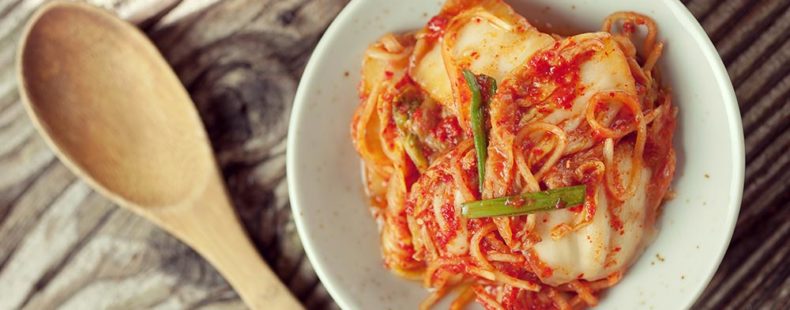
The food is called kimchi, or gimchi, kimchee, or kim chee. It is a fermented, spicy cabbage dish and the most common banchan, or side dish in traditional Korean cuisine.
There are hundreds of ways to prepare the dish, but many use Napa cabbage, which is currently in short supply. The price of a head of the cabbage is now more than $10.
The cabbage used to make kimchi was not named after Napa, California’s famous wine region. In fact, the name comes from colloquial Japanese. The leaves of the plant, especially when they are used for food, are called nappa. The vegetable is known elsewhere in the world as Chinese cabbage and celery cabbage.
Koreans have been eating a version of kimchi for thousands of years. They claim that the high-fiber, vitamin-packed food helps ward off disease and aging. No wonder, then, that Koreans are now waiting hours to buy the government-subsidized vegetable.
@Joon Yeon:i agree with you,,all of my korean students here in the Philippines last summer camp loves Kimchi,,and i’ve tried eating it also,,lets just pray that no one will suffer food shortage^_^
Pickled or salted vegetable are my favorite.
I also like whipping cream.
It’s true that Kimchi is very important to Korean and it somehow caused some problems, the price of it dropped a lot recently and many citizens are getting BaeChu at relatively cheap price..
[...] więcej: What's the name of the food causing a minor crisis in South Korea … buy-the, disease-and, food-helps, high, uncategorized-, waiting-hours, ward-off, ward-off-disease [...]
Nappa cabbage IS what they use in Korea. Chinese cabbage and nappa cabbage are the same. Koreans have been eating kimchi only for hundreds, not thousands years. The effect of consuming Kimchi is not a claim. It has been scientifically proven. Your cynicism in the last paragraph is absolutely not appreciated or necessary.
kimchi
I am a south korean too. my grandmother is to worried about the baechu(cabbage) price going up
Stop telling lies Joon Yeon.
Woa, talk about a crisis.
I’ve never heard of Napa cabbage being used to make Kimchi. Whether it is the same as Baechu, the actual name of the cabbage used, or not, the usage of the term in an article about Kimchi, a Korean food, seems inappropriate. It’d be equivalent to describing Japanese Natto as being prepared with Korean beans. That’s silly.
Just like to add that the website does more thorough research before they put any article.
The word Kimchi is originated from the ancient word ‘Chimchae’ which means dipped(salted) vegetable in Korea. Hitorically, The word ‘Chimchae’ can be found in the old record book (Hun Mong Ja hoe) belongs to the Korean Joseon Dynasty era that this word has not been found in elsewhere yet. Therefore the word ‘Kimchi’ has nothing to do with Japanese, but unique Korean traditional word.
Hope to enjoy this salubrious dish!!
I love that stuff, but it was a little on the expensive side to buy at walmart for a peanut bar jar size. If prices are down I may check to see how much.
I need a spell check for comments
I had a very dear friend introduce me to kimchee, and I liked the food. My only regret is lack of knowledge preparing it. Thank you for the article.
I’m Korean and love kimchi very much.
Despite of high price of cabbage, My mother have bought that and made kimchi then. and gave some to her friend.. I became so angry!! I wanted to eat kimchi as much as I can !!!
I do not have all the proper termonalagies or ologies?? to represent other than I kind of like the dish,er, side dish.I myself enjoy a great variety of foods from different ethnic backgrounds. Sometimes I think there is no predjudice when it comes to food, thanks to the BIG GUY, upstairs whomever one believes may be. Thanx for letting me put my 2cents in.rossco123@q.com.
I agree with Joon Yeon.
We call the cabage for kimchi as “baechu.” I’ve never heard of Koreans calling baechu “napa” before. I also want to add to Ethan Kim’s comment. Kimchi is scientifically proven to be a healthy food. The healthy ingredients and the fermentation process help the dish to be good for everyone. I mean, even the Japanese are copying our kimchi to make Kimuchi. Kimchi’s healthy nutrient is not a “claim.” It is a fact.
@ jessica : i no right i love that stuff but i agree with you ————————— and to every1 else kimchi is good and all and im chinese but still the stuff is good so the prices doesnt matter you can wait until the country gets more shippings of cabbages or you can just go and buy them at the price their at it doesnt really matter. But if ur asian wait until the prices go down then buy it cause wat asian wastes their mone on a yogurt size package of kimchi for $100 when you can buy like a truck size package of kimchi for like uuuuummmmmm… $1
XP
IF THIS STUFF KIND OF OR DOESNT EVEN MAKE SENCE SRRY IM ONLY 13 AND I STILL DONT UNDERSTAND THE ECONOMICAL AND GOVERNMENTS SYSTEM OF THINGS
Wow – I think maybe Ethan Kim needs to not be so sensitive. There was no cynicism – the author was just adding another point to the topic :/
Of the 3 things I loved and enjoyed while traveling Korea, Kimchi was number one!
@Joon Yeon “Let’s note that the cabbage used in Kimchi is called ‘Baechu’ in Korea …”
Yup!
Interestingly, the food contains large amounts of sugar and salt, rendering it very unhealthy to all eating. I would like to refute this suggestion, as I have tried, but after observing many people make it over the past few years in Korea, I have seen that these ingredients are necessary and always added, and very unhealthy.
This is so borin
Koreans are the only people that I know of that truly “digs” a native dish.
As a writer, I marvel at their “addiction” to kimchi. But then again, I shouldn’t as I’m also an almost fanatical fan. After watching tons of Korean dramas and films, just around three months ago I came across an article that expounded on its nutritional values, and so I had to give it another go—I never liked it when I was introduced to it by a friend more than two decades back, its pungent smell alone killing my enthusiasm at trying something exotic or novel.
Life overflows with interesting tidbits to enhance or just satisfy my “joie de vivre”, but getting hooked on kimchi was as far removed from my psyche as driving on the left side of the road, as close to one third of the world’s countries do. In fact, it has become part of my staple diet. Think of a Filipino living in America and having a love affair with it.
It’s an acquired taste though, but there’s something about biting into it that triggers my taste buds and memory to look forward to my next session with it—it’s just simply appetizing.
So I don’t blame the citizens of South Korea, in my mind my second adopted country, for experiencing some kind of emotional panic for fear of not getting their fill of kimchi. One of my hopes now is to eat it inside a restaurant somewhere in Seoul, or anywhere in South Korea (the North too if allowed).
That might just seal my devotion to it!
@Jessica Walmart! Why do you give Kimchi a bad name! Buy it at those local korean stores!
It really has been proven that kimchi helps prevent diseases and is good for human health because of the garlic and other ingredients that goes into its seasoning as well as that baechu itself being high in fiber. Kimchi originates from Korea, and because of its popularity, the Japanese created their own kimchi taking some references from Korea’s.
Korean Kimchi is made from Napa cabbage, which is the Korean word “Baechu.” No need to do research. Napa is also called “Chinese cabbage” as the article states.
i love it…i already tasted it!
it is scientifically proven that it is great for your health
but it tatses amazing
i love it and i know that lots of others do too!^^*
[...] of baggage. — Sauerkraut and kielbasa also has curative powers. — Throw in a little cat’s paw and see if that’s the link. — Mayhap it’s only special spicy cabbage — to [...]
It would be very good to see the scientific proof of it being ‘healthy’. I have seen countless stories and reports of it damaging health. I have not once seen a report suggesting its medicinal properties. I would love to see them if they truly exist. I am really not trying to be negative, just would like to know.
I love water kimchi, (which is another kimchi variety)
Contains ginseng, garlic, anchovies, and sesame seeds…MMMMM yummy.
Gotta appreciate kimchi!
I had a Korean pen pal once and I know for a fact, they LOVE kimchi. And I think it is also kind of common sense that anything home grown in korea probably is not named after something in the U.S.
@jessica: You don’t need a spell checker. A dictionary would suffice. And you’re already on dictionary.com.
@Jessica: I totally agree with you! We do need a spell check for comments. Thanks for your comment
@ Ethan Kim, Jee Min Lee
Referring to something as a “claim” does *not* necessarily imply that it is untrue. Many scientific discoveries are referred to as “claims,” especially when it comes to the health benefits of various foods (ostensibly because the opinion of “science” seems to reverse itself every few years when it comes to which foods are healthy and which aren’t).
~Saf
I ‘ve never had it but I would like to try it.
anyone from concentrix here?
yep..cx present,,havent tried kimchi,my mom loves it but i havent gotten my self to want to try it,it’s the smell that turns me off im sure ill try it the next time my mom makes one
Hello Ms. (or is it Mr?) Mitac,
You sounded like you were an American-Korean who either was born in the U.S. or came there when you were young. Growing up Filipino with a delicate taste,I know the feeling of being repelled by the smell alone. (Have you heard of our “bagoong” or “patis”?) I would suggest to you and Amy-Lou to try it first in smaller pieces with meat, fish, noodles, or anything. That was pretty much what I did until I got used to it. I’m still not able to eat it without accompaniment, whether bite-sized or in long strips, but, like I said before, I’m stuck with it now for I just love it! So good luck!
Its called………….. CHAI!!!
(Triple M, you know what i mean)
Let’s note that the cabbage used in Kimchi is called ‘Baechu’ in Korea, not Napa cabbage. It is more commonly referred to as the Chinese cabbage, not Napa cabbage.
The word ‘Kimchi’ originates from the Korea word meaning ‘to preserve’.
The price of ‘Baechu’ has now dropped back to just over a dollar as of yesterday. (Oct.22)