As we’ve discussed before, if you live in Michigan, you may consider yourself a Michigander or a Michiganian. (Check it out.) But why are demonyms so various and seemingly random? (A demonym is any name derived from a place. The word “demonym” was coined by Paul Dickson, an editor at Merriam-Webster, in his 1997 book Labels for Locals. Californian, Frenchmen, New Yorker, and Swiss are all demonyms.)
In some cases, the demonym preceded the place name. For example, Finland is the place where the Finns live, just as Germany is the place where the Germans live. The people came before the official government and place name. (Parts of what we call Germany was called Prussia until 1932.)
In English we denote place of origin by suffixes. The most common suffixes that denote place are: -(a)n (Chicagoan), -er (New Yorker), -ese (Chinese), -ian (Norwegian), and -ish (English). Where did these suffixes come form? Latin, of course. -ish actually comes from Old English, which is why citizens of the British Isles have -ish demonyms: Scottish, Welsh, English, etc. The other suffixes came from Latin, though they each convey slightly different senses. -ese most directly meant “belonging to or originating in a place.” -(a)n and -ian are variations on the same suffix meaning “belonging to.” -er was used principally in the sense of “one having to do with a thing,” as in lawyer or villager. As with most vocabulary in English, they all now coexist and serve the same purpose.
It’s also important not to confuse demonyms with adjectives. You can listen to an Argentinian song, but it is sung by an Argentine.
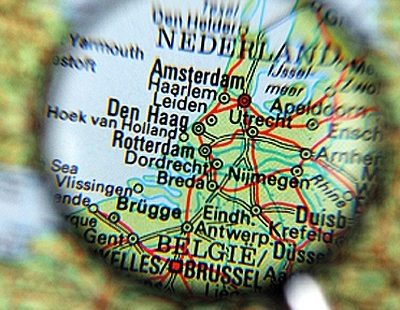
Now, what about the Dutch? There are three terms we need to define: Holland, the Netherlands, and Dutch. In Old English dutch simply meant “people or nation.” (This also explains why Germany is called Deutschland in German.) Over time, English-speaking people used the word Dutch to describe people from both the Netherlands and Germany. (At that point in time, in the early 1500s, the Netherlands and parts of Germany, along with Belgium and Luxembourg, were all part of the Holy Roman Empire.) Specifically the phrase “High Dutch” referred to people from the mountainous area of what is now southern Germany. “Low Dutch” referred to people from the flatlands in what is now the Netherlands. Within the Holy Roman Empire, the word “Netherlands” was used to describe people from the low-lying (nether) region (land). The term was so widely used that when they became a formal, separate country in 1815, they became the Kingdom of the Netherlands. The word “Holland” literally meant “wood-land” in Old English and originally referred to people from the northern region of the Netherlands. Over time, it came to apply to the entire country. Got all that?
Here are a few of our other favorite exceptions to the rule:Kiwi
Neapolitan
Liverpudlian
Cypriot
Czech
Turk
Buckeye
Hoosier
Spaniard
Greek
Swiss
Swede
Uzbek
Do you have a favorite demonym? What’s the demonym for the folks who live where you live?
Places ending in a vowel are awkward. Eg. What do I do with WAGGA WAGGA? Dubai? Vanuatu? And how about Tumbarumba, Gundagai, and Narrandera?
Thanks for this article. I’ve always wondered about this.
I have yet to hear consensus on what people from my home town should be called: Ballarat.
Is it Ballaratian, or Ballarati….. Or something else
What’s the story with “kraut”? Is that an adjective or a demonym?
Well there is always Going Dutch!! LOL The phrase “going Dutch” probably originates from Dutch etiquette. In the Netherlands, it is not unusual to pay separately when dating.
What about Los Angelenos?
Very interesting but, where did the suffix -ite come from, such as Wyomingite?
Am I really the first to leave a comment? Im not sure if my first post went through. I was wondering where the suffix -ite comes from?
I love Germanic history and linguistics! Excellent post. I don’t think I quite have it all, but after another read…and maybe a chart…I think I’ll understand the Dutch from Holland…or is it the Netherlands…?
For more confusion (that will hopefully eventually lead to clarity), see the Wikipedia article on the same topic: http://en.wikipedia.org/wiki/Netherlands_%28terminology%29.
Hi
I love the Dutch! Go Holland!
Over here in Manhattan, we’re usually just New Yorkers. The specific bloke would call us Manhattanites. It’s a term some people have coined for us.
“Germany, as we know it, was called Prussia until 1932.” What the hey?? What idiot wrote this?
Wonderful post, though I want to denote that the demonym of people who are from Uzbekistan is “Uzbekistani”—not “Uzbek.”
“Uzbek” is rather the ethnonym of the predominant ethnicity in Uzbekistan, the Uzbek people.
Interesting…
Being originally from Texas, I know I’m a Texan at heart.
But living in Washington DC for the past 8 years, I now realize I don’t know what to call myself if using a current demonym. DCite? … but -ite was not a suffix I can use. DCian? Washationian? Now I’m confussed to what I call myself? Please help….
wow!
my fav demonym is uzbek…i think is wackier than others…:D
Thanks for the great article! Quite an interesting read indeed!
What should people from the state of Hawaii be called? Would it be correct to call them “Hawaiian”? Because then it would be easy to confuse the term to also mean “Native Hawaiian”.
(Germany, as we know it, was called Prussia until 1932.)
No, it wasn’t. Germany was united in 1871 under Prussia’s leadership, but was then called the German Empire (Deutsches Reich). Prussia and the other states (Länder) constituting the the German Empire continued to exist but were subordinate to Germany.
“Netherlands” was used to describe people from the low-lying (nether) region (land).
How low can we go?!:-)
“Germany, as we know it, was called Prussia until 1932″
This is wrong. Germany was never named Germany. Today it’s officially called the German Federal Republic, short: Germany, in 1932 it was officially called the German Reich, short: Germany. In 1817 it was called The German Confederation, short: Germany. In 1812 it was called Holy Roman Empire of the German Nation probably called Germany in short.
Prussia was just a kingdom within these entities, dominating the area of todays Germany between 1866 and 1918. Saying Germany was called Prussia, is like saying the US were called Washington DC until 1932.
“Germany, as we know it, was called Prussia until 1932″
That’s not true. Germany was always Germany and Prussia was a German state. Germany was (re)unified in 1871 under the King of Prussia. Prussia – as a subunit of Germany – was afterwards abolished.
If “Holland” literally means “wood-land” does our “Hollywood” mean “wood-land wood”? “Woodent” that be fun?
I’m a Mainah! (Mainer)
Hua Hinite, for people who live in Hua Hin, Thailand
Hi I find this information about the origin of words so interesting. About 5 years ago I studied health related vocabulary and really only then became aware of how english words are ‘put together’ with smaller words. I haven’t pursued this, but would love to study words. To what end would a person do such a thing aside from personal interest?
Actually, for “Deutschland”, I believe the root is “deut” or “deutlich”, which (more or less) means “clear” or “clearly”, and the Germans thought of themselves as “the people who speak clearly”.
It is highly unlikely that the Germans of yore borrowed an English word (“dutch” or variant) to refer to themselves – especially considering the large volume of English words (again, of yore) borrowed from the Germans.
It may be that the English borrowed a Dutch or German word variant to refer to the people of Holland, but unlikely it went the other way.
I am a teacher ~ Special Education, anywhere from 4-8th grades. English/Language Arts/Spelling have been a weak area all my life ~ give me a math problem over sentence structure any day!! I love reading and learning why English is the way it is ~ we have many “rules” and than exceptions to those rules. Often times, I learn something from this site and take it back to the classroom … not sure they will retain it, but maybe someday, when they are older and hormones are less of a priority, they will think back and remember! Thank you for this site ~ I really enjoy and learn!
Susie
well my favorite demonym is Greek because it rhymes well with creek!
anyways interesting article
Cheesehead
this is informative. i hope that there’ll be more of this…
This still doesn’t answer the question “If the people from Poland are called Poles, why aren’t the people from Holland called Holes?”.
Canuk!
Hoosier by birth, Boilermaker by choice!
Actually the Dutch use “holland” themselves to denote 2 provincies in the west (north&south)
Although some people use “Holland” to refer to the whole country of The Netherlands, it’s actually just the name of two western provinces, North Holland and South Holland.
I find this information fascinating. And I learned a new word, “demonym”.
The date of 1932 for the use of the term Prussia rather than Germany seems pretty random. The German empire was proclaimed in 1871. Prussia was a state within the empire and the subsequent Weimar republic and continued to be one during the era of the Third Reich, i.e. after 1932. In any case the Nazis came to power in 1933. Prussia ceased to be a state in Germany after Germany’s defeat in 1945.
Interesting stuff. Raises one question though: if “Holland” used to refer to the north of the country, why is it only the west of the country that is called (north- and south-)Holland these days? Or was that a VERY liberal definition of “north”?
Holland doesn’t actually refer to the whole country. It refers to two of the country’s 12 provinces – South Holland and North Holland – which are in the West of the country and which contain the biggest cities, including Amsterdam.
The northernmost part of the Netherlands is made up of the provinces of Friesland and Groningen – not Holland. There are plenty of Dutch people from elsewhere in the country who dislike the inaccurate use of the name “Holland” for the whole country!
I’m from Fitzroy, where we’re all Fitzroyalty!
Greetings from a Malaysian!
What about “nutmegger”, a demonym for people from Connecticut?
Why Dutch living in Holland/Netherland is a good one to be favourite!
However, the place where I reside… Oshawan…. is demonym for the inhabiting people.
A great article; enjoyed it very much; thanks.
4give me. No comments, I see, in blue of the hot word that is posted yesterday and it is 1:33pm here in Oshawa, Ontario, Cana… of December 17, 2011; I like to see and find what happens to above as I post mine. How amny number will show in blue and in deep-dark RED that is vulnerable to be manipulated to show one more, and therefore discrepancy. Sorry for this and this need to be noted.
manucunian! stephanois! carioca! nutmegger!
I did enjoy reading this article, it’s funny ’cause it had been a while since I had been wondering about the why of the dutch term. I got it clear now. Thanx ^_^
Ottawan.
Having read this informative article, my next step was to search dictionary.com for the actual definition of “demonym.” Imagine my surprise when neither “demonym” nor “demonyms” returned any result!
A person from Damascus is a Damascene, that one is interesting.
Ours is one of the simplest I believe, I am Australian, from Australia!
I think “Peruvian” is also pretty odd. Where’s that V coming from?
Burkinabe for a person from Burkina Faso
Cairene for a person from Cairo.
What is the demonym for a resident of a place called “Łoś” or Elk.
Sydney -> Sydneysider
Australia -> Aussie
I live in Lawrenceville, GA. Would I be considered a Lawrencevillian? There are many “ville” cities around here, as in Snellville, Loganville, Cartersville, Dawsonville… the list goes on & on. I just had a thought: Since Pleasantville is such a common city name, there would be a lot of happy crooks called “Pleasantvillians.”
I am an American, an Ohioan, and an Elyrian (living in Elyria). But I was born an Amherstonian (Amherst, Ohio), but was raised a Lorainite (Lorain, Ohio).
Here’s one to add to the exception list: “Angeleno,” a resident of Los Angeles, CA.
I am a Californian, originally a Washingtonian, but mostly I am an American from the United States of America; not to be confused with the other american countries, ie North American, Middle American and South American, which consist of many individual countries. My ancestors were Irish, English, French and Dutch.
It amazes me how we people are so proud of our heritage, even if our families haven’t lived there for generations.
If someone from Mars then what would you say?!!
A person from Michigan is a Michiganian! A Michagander is a derogatory term, having to do with polital history! Check it out.
Mind blowing
I am sorry but Prusia has nothing to do with Germans. Prussians were Baltic people (like Lithuanians and Latvians) and are extinct now.
Nashvillain
Is Pennsylvania Dutch not also an interesting example of this? It is certainly not a dialect of the Netherlands but a kind of German dialect reminiscent of that of Hessian.
Other interesting demonyms are those of Gibraltarian for someone from Gibraltar. Jerseyman or -woman of someone from the island of Jersey or the U.S. state of New Jersey; while another inhabitant of the Channel Islands is the Guernseyman from the island of Guernsey.
Then another British example is that of the Man (or Maiden) of Kent of inhabitants of Kent east of the river Medway, while one from west of the river is a Kentish Man or Woman.
“At that point in time, in the early 1500s, the Netherlands and parts of Germany, along with Belgium and Luxembourg, were all part of the Holy Roman Empire.” – Uhm, what?
Pakistan. Pakistani people.
> Germany, as we know it, was called Prussia until 1932.
What. What. I just – what. I could say ‘what’ in every known language ever and it still would not properly convey how absolutely baffled I am at that statement.
Germany and Prussia are not (or rather, were not, considering Prussia ceased to be a country at the end of WWII) the same thing. They occasionally overlapped throughout history, but they were not the same thing. I’m not sure where you heard that, but it’s just…what.
I’m from Brazil. Both the demonym and adjective from Brazil is the same: ‘Brazilian’.
But the city where I was born and live in – Rio de Janeiro – has its adjective and demonym (that are both the same too) totally different from the city’s name, as it happens to Holland and its demonym too. The people of Rio de Janeiro (wich literally means ‘January River’) and the things from Rio de Janeiro are both called ‘Carioca’. Totally different from the city’s name.
The most accepted theory is that the word Carioca comes from the indian language Tupi: “Kari” (white man) + “oka” (house), ‘house of white men’.
In the century XVI, the Tupinambá indians that lived around the Guanabara Bay area (the largest bay in Rio de Janeiro), would have dubbed the Portuguese invaders as ‘Akari’ (Tupi word for the catfish) because of the armor used by the Portugueses, that had plates that resembled the fish’s scales. During the second Portuguese expedition to the Guanabara Bay, in 1503 (Brazil was discovered in 1500), leaded by Gonçalo Coelho, the Portuguese would have constructed, in one of the Carioca river’s mouth, where now is the Flamengo beach, a house made with stones, that the Tamoio indians would have called “akari oka”, ‘house of white men’.
In 1834, through the ‘Additional Act to the 1834 Constitution’, the Rio de Janeiro County separated from the Province of Rio de Janeiro to compose the ‘Neutral County of the Court’ (Brazil was a parliamentary constitutional monarchy until 1889 – now a presidential democratic republic -, wich had its capital based in the city of Rio de Janeiro), with its administration directly tied to the court. It was then created the adjective and demonym to the new county: “Carioca”. Until then, only the demonym for the wrole Province of Rio de Janeiro existed: “Fluminense”, from the Latin: ‘flumens’, wich means ‘river’.
Note: the city of Rio de Janeiro was the capital of Brazil only until 1959. In 1960 the, especially-made-for-it, city of Brasilia, in the heart of Brazil, was made the new capital: the third capital, preceded by Rio de Janeiro and, before, by the city of Salvador, in the state of Bahia.
PS: ‘Demonym’ is a quite weird word, insn’t it? It looks like something hellish. O_o
Can I have some sources?
Interesting article. There is, however, one mistake, unfortunately quite common: the word “Holland” does NOT apply to the entire country. It’s only the name of a region of the Netherlands located along the western coast, subdivided into South Holland (The Hague) and North Holland (Haarlem, Amsterdam). The country contains 10 other regions: Zeeland, North Brabant, Limburg, Gelderland, Utrecht, Flevoland, Overijssel, Drenthe, Friesland and Groningen. Calling the Netherlands “Holland” is like calling the USA “California”: nonsense.
Philippines = Filipino
Tico! Ticos are Costa Ricans. So if my mom is a Tica, then I (half) must be a Tikette and my daughters (4th) must be Teakettles.
Mexicans. First.
Mexican. First!!
That explains it pretty well, but why didn’t the Dutch stick to one name only? I would think the “older” name from Netherlands used to describe them would be almost insulting, as it was used to describe them separately from Germany and other nearby countries as an after-thought. I guess once a name sticks, it’s stuck?
Costarrican are call ticos or costarricenses
What’s the demonym for Massachusets? I don’t live there but i’ve always wondered that.
To further complicate matters, one of the provinces in the Netherlands is called Holland, and citizens of the other provinces do not like to hear the entire country being called Holland.
The province Holland contains some of the most important urban areas, such as Amsterdam, Rotterdam and The Hague.
Baltimore ons, Oui?
you missed the suffix -i: israeli, somali, qatari, yemeni, saudi and many others.
This was very interesting.
What about Filipino from the Philippines?
and ite in israelite from israel
Finally I know the answer now! A few favorite demonyms of mine: Sydneysider, Louisvillian, Novocastrian (Newcastle), Québécois, and Brisvegan.
Nice article. Nevertheless, the author has got at least two of his facts wrong. The first one regards to the use of Prussia. Prussia ceased to exist with the proclamation of the Germany Empire in 1871. Before this, Germany as a country did not exist. It was a collection of independent German states. I think you may be confused with the transition of the German Weimar Republic into the national socialist Third Reich in 1933.
The second one concerns the use of the word ‘Holland’. Holland is not in the north of the Netherlands as the article claims, but in the West. The reason people sometimes say Holland instead of the Netherlands is that throughout history and today still Holland (these days divided into a North and South Holland) is the most powerful of the Dutch provinces. It is a little bit like saying England when one actually means the UK.
The last few demonyms are so funny(and demonic) very haunting and they don’t very much follow their country rules.
I moved to a city called Philomath in Oregon. My brother called them Philopians, but that can’t be right.
Lancastrian is a great demonym… it identifies a native of Lancaster.
(Accent is on the second syllable … lan CAST rian)
“This also explains why Germany is called Deutschland in German.” The implication from the sentence prior to this one is that Deutschland means the people of the land. Wasn’t the land peopled by the Teutons, which would make them Teutsch and, given the phonetic promixity of “t” to “d,” this became Deutsch?
The placing of Holland is not entirely correct: Holland describes more the western part of The Kingdom of the Netherlands, i.e. rough the coastal region from Rotterdam via Amsterdam to Den Helder, where the islands start. Here lie the provinces North Holland and South Holland.
In the North of the Netherlands we have the Frisians (in the province of Friesland) and the ancient Saxonians in the provinces Groningen, Drente and Overijssel.
I am a part Frisian/ part Groninger myself.
Kind regards,
Bauke Wolters
(a typical Frisian/ Groningen name…)
Down the bayou, we are known as Coonasses or Cajuns. Creole means you are of mixed race but tends to reference south Louisiana.
Me Indonesian from Javanesse
My favorite demonym is “Guamanian,” because it’s just fun to say! Also, it sounds like a word one could use to describe someone who is crazy (manic) about Guam.
If you’re from Lincoln, Nebraska, you’re a Lincolnite.
Holland is a region within the Netherlands (a bit like a county in England). Referring to the Netherlands and “Holland” is technically wrong.
what a great article, very insightful.
this is the kind of information i find worth reading.
keep it coming, thanks.
It’s interesting that the not-uncommon word “demonym” does not appear in the new American Heritage Dictionary, 5th Edition. Now that I read that the word was coined by an editor at Meriam-Webster, I wonder if it’s an intentional slight(?)
Madrid——-Madrideno
Rio———–Carioca
Baltimore– Baltimoron
My favorite demonym is Ghanaian, of course. I am Ghanaian!
So where does the demonym for “Peruvian” come from?
When I was a child I asked my parents where I came from. I didn’tget a one-word answer or even a one-sentence answer.
Sometimes demonyms end in -ite.
What about -i, as in Iraqi or Bangladeshi? Why are people from Madagascar called Malagasy?
Great topic!
Another exception to the rule: Israeli – which is based on the Hebrew word to describe a person from that country “Yisraeli”.
People from Halifax are called Haligonians
Really enjoyed this article and it is relevant to a unit that I am teaching in my literature class right now. Golden timing!
But I do want to know, where is the evidence that Germany was called “Prussia” until 1932. I thought Germany became a united and recognized country in 1876, when it took on the name. And I thought it was referred to as “Germany” all throughout World War I. If that is the case, I’m politely setting the record straight. If your article is indeed correct, can you point a history teacher to a reliable source because I have some explaining to do to my students…
Thanks again for this article!
Hi, I live in the part of the Netherlands called Holland, the country is the Netherlands whereas ‘Holland’ only refers to two provinces of the country.
As a professor of German, I have to disagree with your comment that until 1932, Germany was called Prussia. This was true neither in Germany itself, nor in the United States. The official name of German after 1871 was das Deutsche Reich (the German Empire). The GE was, it is true, formed under the leadership of Prussia, which had over the course of the late eighteenth and early nineteenth centuries become the largest of the states in what was to become Germany after the unification that came in the wake of the Franco-Prussian War (1870-71).
Seattleite. Don’t worry, the only things we tend to orbit are coffee shops.
One of my favourites has to by Muscovites for people from Moscow, though this may be an outdated term.
Great article! I think demonyms are very interesting, and the Netherlands/Dutch one is surely one of the oddest. As for the assertion that “Germany, as we know it, was called Prussia until 1932,” what basis does the author have for this claim?
Germany was officially known as the German Empire (Deutsches Reich) from unification in 1871 until 1949 when it was split into East and West Germany in the aftermath of the Second World War.
Prior to 1871, the area we think of as Germany was made up of independent kingdoms and principalities. While the German states did unite under the Prussian king in 1871, Prussia itself did not encompass what is Germany today.
Liverpudlian and Cypriot just roll off your t ongue in the most amawing way.
I come from Brisbane, Australia. So, Brisbanian? Brisvegan? Brisbaner? I mostly just say “South-East Queenslander” or “from Brisbane”.
[...] ‘Demonym’ preceding — Stephen Fry has much to say — We suffixiate to coexist — forgetting [...]
Long ago when I was very young, I lived in Hobart, Tasmania,(an island state of Australia). My mother taught me that residents of Australia regarded then selves not as “Tasmanians” but as “Taswegians”.
As a further illustration of how language changes when I lived ther (1951 to 1954)the suburb called “Bellerieve” was pronounced “Bell-reeve” as befitted its French explorer origins, but when I returned in 2002 a woman serving me in a shop pronounced it “Beller-reeve”. Interesting!
Dallasite, as in, someone who lives in Dallas, Texas.
Actually, Holland refers to the western part of the country. Friesland is the name for the northern part. And do not go about calling the Friesians ‘Hollanders’ because that annoys them very much.
I’m from Connecticut; personally, I call anyone from the state a Connectinut, or a Connectinutian…
I live in Tasmania, Australia. In polite company we are called Tasmanians, but I have also heard us refered to as Taswegans.
As people of words you may like to have a go at my interactive crossword and wordsearch puzzles, EduPuzzles. See http://www.edupuzzles.com > Products.
I come from Melbourne Australia so I’m a traditionally-named Melbournian, but I quite like the novel demonym given to our neighbours from the north – the Sydneysiders. I also like that someone from Newcastle (particularly in NSW) is called the Latinate term ‘Novocastrian’, though I am not sure if their UK counterparts prefer that demonym to the ‘Geordie’ term…
Merry Christmas all…
What is the demonym for residents or natives of Baltimore? of Connecticut?
Are they Baltimoreans? Baltimorans? Baltimorians?
Connecticutians? Connecticutters?
We are proudly Athenians! Home of five points and the Georgia Bulldogs!
You didn’t mention -ite (as in Israelite). I’ve heard that one added to a lot of place names.
I kind of like our local one–Spartanburger–which my son thinks would make a great restaurant name.
It’s amusing that you have used the word ‘demonyms’ in your article and it isn’t list in the dictionary as being a word! lol. I assume that ‘demonyms’ is a naming system based on geography?
Sydneysider – for someone who lives in Sydney, Australia
Seattleite
What does this make people from Connecticut?
Someone from the city of Nassau, on the island of New Providence in the Bahamas, is called a Nassauvian (pronounced “nassoovian”).
Someone from the island of Abaco is called an Abaconian.
Someone from the island of Bimini is a Biminite.
In the southwestern corner of Montana, there are to small towns located on I-15 about 10 miles apart….Glen & Melrose . Residents of the former are known as ‘Glenites’…while the the latter are referred to as ‘Melroseans’.
Thanks for the clarification, but I’m still not completely clear on this Holland/ the Netherlands thing. Article states that “Holland” is now used to describe the whole country? If so, then why do people still call it the Netherlands? I noted in the comments that a few people from that area–or familiar with the region–still refer to the country as the Netherlands. And Holland is just a region within the kingdom. Is that correct? Like others have said, I, too, have wondered why people from the Netherlands speak Dutch and where Holland fit into that area. Good stuff!
As mentioned before, I would also be interested in the original of the suffix -ite. I myself am a Durbanite.
New South Welshman (not woman, apparently) … otherwise just plain Aussie (Australian)
Glaswegian.
Australia – Australians.
Melbourne – melbourneans
Bendigo – Bendigoians
Ballarat – Ballaratians
Victoria – Victorians
It’s all about the ‘ians’ or the ‘ans’ when it comes to most places in the state of Victoria, Australia. :p
Simply enthralling and highly informative. I have learned a lot and more by this simply article. Now I know why I am called a Nigerian.
very informative.more expected.
very informative
Kes on December 17, 2011 at 4:39 pm
‘ “At that point in time, in the early 1500s, the Netherlands and parts of Germany, along with Belgium and Luxembourg, were all part of the Holy Roman Empire.” – Uhm, what? ‘
The Holy Roman Empire. Heiliges Römisches Reich. Imperium Romanum Sacrum. Little thing that existed in Europe from like mid 10th century AD to 1806. Made up most of central Europe for almost a millennia.
Might want to look it up.
People from Baraboo, Wisconsin are Baraboobians.
People from Mazomanie, Wisconsin are Mazomaniacs.
We call them “Dutch” they call themselves “Nederlanders”.
I’m from the city of Halifax. You’d think we’d be Halifaxians, but we’re not. We’re Haligonians. Never understood why.
[...] HotWord is “demonym.” Filed Under: Second Marking Period (2MP) About [...]
I was once married to someone from the Netherlands and he called them “Nederlanders”. Anyone else heard that?
The word demonym is not in you dictionary, which I find funny as you have featured it as a hot word!
I am from Glasgow, Scotland and am therefore a Glaswegian.
I think Burmese is still used for those from Myanmar. I’ve never heard of a term like “Myanmarese” or, “Myanmarian.” Anyone have any insight into that one?
That’s all well and good but you still haven’t explained why we call people from Holland, Dutch but we don’t call the Germans that any more. I felt like the article ended just as it started getting to the point.
An interesting article. It *doesn’t* explain though why the Germans aren’t called ‘Dutch’ anymore
“Germany, as we know it, was called Prussia until 1932.”
not accurate!
i would say : “part of present-day Germany was called Prussia until 1932
I dont know who wrote this, but this is one mistake after another! However, Its nice to finally know now, why the english use ‘Dutch’ to describe us. But please writer, PLEASE, dont write about stuff (Europe) if you dont know anything about it. Or copy the info from Wikipedia or something!
People from Goma, in the DR Congo, are called Gomatricians. (Or perhaps more correctly “Gomatriciens”)
That is definitely my favourite.
People from Connecticut? I believe that would be Moronians..
Ok, the article should have just stopped with a discussion about demonyms, period. The history of it and where people come from, and the Dutch is just so off as to negate the whole article.
It has been mentioned plenty of times already that Prussia was a state within Deutschland, and that “Germany” itself was in fact a country–just with longer names that changed over time.
I am also a historian and have study Prussia and Germany extensively, and as far as I know, every other country refers to the Deutsch has “Germans,” or a form thereof–but the Germans are the only one that refer to themselves as Deutsch and Deutschland. Given that that is the case, how then is Deutcsh derived from Old English?
I have always followed the origin of ‘deutsch’ as follows:
France derives from the Franks, the ‘tribe’ that settled there and rose to power. Germania, and Germani were used by Tacitus (his texts were redicsovered and publised in Italy in 1455) to describe the region where a common dialect was spoken, but not a single ‘tribe’ or specific people. Germany, as a term for the general area of present day Germany and its inhabitants, did not become find common usage until about 1500.
I have always followed the explanation found in “Germany: A New History” by Hagen Schulze:
“the word ‘deutsch’ comes from ‘thiutish’ or the Latin ‘theodiscus’, a term meaning simply, “vernacular.” It thus referred not to one particular language but to any language spoken by the people…A “German” language, however, in the sense of a common tongue understood by everyone in the various regions east of the Rhine, did not exist at all.”
The term Germans, however, was used by the Gauls to denote those savage peoples that attacked Gaul from across the Rhine, and Caeser is credited with coining the term “Germania” for the region/land beyond the Rhine and Danube Rivers.
and further:
“…a text containing a reference to ‘diutsche lant, “German lands” int eh plural: not a single land but the lands of the Swabians, Bavarians, Saxons, and Franks, regions linked by the fact that similar vernacular languages were spoken there. ‘Deutsch’ was a purely linguistic term and remained so for a long time to come.”
After a discussion on ‘teutonicus’ or Teutons bearing condescending overtones, Schulze continues:
“from 1157 on, the “Holy Roman Empire….came into use as well. The term “Franks” had established itself among their neighbors to the West; the peoples to the east desired to distinguish themselves not only from this group but also from the Italians and the Curia of Rome…’regnum’ (kingdom) and ‘teutonicum’ gradually came to be linked together. Still, the notion of a “German nation” remained murky….they styled themselves ‘Roman citizens’. Only gradually did the Germans grow accustomed to being called “Deutsche” or Germans, and when they adopted the term themselves, they attached no particular importance to it.”
I can’t find the other reference right now, but there is also the second part of this explanation that as “Germans” were finding themselves as an actual ‘people’, the moniker ‘deutsch’ as ‘other than Latin’, or ‘outsider’ appealed to them, as they were their own people, and so they referred to themselves as Deutsch vs. German.
Food for thought, at any rate.
Baltimorons, Philthydelphians, Pissburgers, Bostonitards…
That makes people from Miami, “Northern Cubans,” and folks from Atlanta, “Confederates.”
For Michigan – we also often (playfully) use the yiddish “meshugener” (crazy male) and “mishugeneh” (crazy female).
The words flow well, and even though we do love Michigan, all the snow does make one a bit crazy…
(and living in a place named “Kalamazoo” – well – that proves we have a sense of humor)
-Cyberquill, the term Kraut, meaning a German person, goes back to WW1, I believe. It’s derived from the word sauerkraut (sour cabbage) an iconic German food. Therefore the Germans were called Krauts.
Actually, someone from Brisbane is officialy a Brisbanite. Brisvegan is more of a nickname.
And while Scottish, Welsh & English would be the appropriate collective terms, for an individual it would be a Scotsman, a Welshman and an Englishman.
My favourite demonym is that for the Isle of Man – Manx, or a Manxman.
What about Oklahoma City??? Oklahoma Cityites is long and strange!
You would have to be crazy to live in Michigan; hence the old proverb: “What’s good for the mishegoss is good for the MIchigander.”
I am a “Floridian” . . . and people from Tampa are “Tampanians” — despite what some of you cheeky monkeys might THINK they are called . . .
I’m from BOSSIER CITY,LOUISIANA!!! Would this make me a BOSSIERITE,I take it?!?
Well, the incredibly errant statement about Germany has been sufficiently, and quite justifiably, excoriated. The profound ignorance demonatrated casts doubt on the credibility of the article. I did enjoy the various natives reciting their “demonyms” (if it is a word) though. In that spirit, I am or have been an East Pointer, Atlantan, Fultonian, Cobber, Mariettan, Dallasite, Toluca Laker, Angeleno, Georgia, Texan and Californian.
@Max Deutsch “Parts of what we call Germany was called Prussia until 1932″
Clearly emphasizing PART OF…
Do a quick Google search before calling anyone an idiot…
@Wesley Any caucasian/black/main-lander in Hawaii no matter how long they have lived here is a Houli. They may become locals for being born here, but they will always be Houlis. People often define themselves from which part of Polynesia they are from or Hapa which is of mixed race. Hawaiians will always be referred to as native Hawaiians.
@Anonymous Filipino is actually the Spanish pronunciation for a person from the Philippines, it is just more widely used
Boricuas are people from Puerto Rico. It comes from the native Taino (native people of the island) name to the island called Borinquen, not the Spanish given name of Puerto Rico.
Somebody asked what the demonym for Massachusetts is. I am from Nova Scotia (“Nova Scotian”). The first time I visited Boston (inhabited by “Bostonians” or “Beantowners”), I asked the same question. The first few people were stumped. Eventaully a taxi driver said “Bay Stater”.
Oddly enough, the word “demonym” is not in the dictionary at dictionary.com!
Alexandra, I have heard that Germans are referred to in the Bay Ridge section of Brooklyn as “Dutchmen.” And, of course, the Pennsylvania “Dutch” are Germans.
This really burns my beans. I agree with Boo Boo. If you don’t know anything about a subject, DO NOT WRITE ABOUT IT.
Real-life conversation on this same topic, back when I was a technical editor for an international development firm:
I was reviewing a new report on a project underway in El Salvador, and one of the firm’s project managers, who happened to be a native of that country, happened to be in the editorial suite when I read the strange, it seemed to me, word, “Salvadorian,” in the report.
“Salvadorian?” I said out loud, but the project manager made no response.
“That word cannot be right!” I continued. “Salvadorian?”
Still no comment came in response from the project manager who is a native of El Salvador.
So I says to him, “Is ‘Salvadorian’ a word?”
Still, no comment from him.
I continued.
“For example,” I said, “‘Americanian’ is not a word! Y’all don’t call us ‘Americanians,’ do you”
“That’s right,” the project manager responded at last.
“So what do you call us?” I asked.
“Gringos,” he said and walked out of my office w/out another word.
“Touche,” I said to myself while LOL!
A few grammatical errors and in the article above. Surprising and curious to find these in any post on a site devoted entirely to language and its use.
A few grammatical errors appear in the article above. Surprising and curious to find such errors in any post on a site devoted entirely to language and its use. Similarly, the word “everyday” is also used incorrectly in the short post on the same site about the word, “dreamt,” — http://tiny.cc/6o694 Whazzup wid dat, dictionary.com?
I was ALMOST a German; instead, I’m from Garden Grove, in southern California. What I am called then? Garden Grovian? I prefer Argonaut (Argo for short), after Garden Grove High School’s mascot, ;]
Quote from above: “The word “Holland” [...] came to apply to the entire country”. Wrong. Completely wrong. Holland has and will always be a province of the Netherlands. The fact that the 2 are now “one and the same” is a “foreign” (non-Dutch) distortion even Dutch individuals abide by today.
If you want a map to see the difference between Holland and the Netherlands: http://en.wikipedia.org/wiki/Holland
Similarly, a lot of people mistake Den Haag (The Hague) for the capital of the Netherlands. The capital has and always will be Amsterdam. The fact that the government seat and Queen’s residence are in The Hague has “nothing to do with the price of peas”.
I think I’m correct in remembering that “Afghani” is a unit of currency, and “Afghan” is the demonym, though this is rarely honored in print and broadcast.
What about -ite endings? When I lived in Berkeley, I called myself a “Berkeleyite.”
I notice that demonyms precede place-names in precolonial African definitions of place that survive today, and generally lack suffixes (e.g. “Zulu,” “Igbo”), but colonial and post-colonial demonyms get suffixes (e.g. “Congolese”/”Congolais,” “Nigerian”).
I’ve always wondered about demonyms from different languages that are seemingly unrelated. For instance: German, Deutsch (German), Tedesco (Italian).
Lol Ian I wonder what people from Tampa are called!
Pipefitters rule, boilermakers drool
Aussies (pronounced Ozzies) for the Australian side of the family and San Diegans for my current town in southern California.
Going through school in Antwerp, Belgium, we learned the term Nederland (country), Nederlander (person of) and Nederlands. (language off) However, I and other Belgians still refer to The Netherlands as Holland, a person from Holland is a Hollander and they speak Hollands. Dutch cheese is thus Hollandse kaas- and is marketed that way in our stores.
There is no such thing as “Belgian” as a language. We also learned in school that we, in Belgium, Flemish region speak “Algemeen Beschaafd Nederlands” (general civilized Dutch) of course as soon as we left the school doors, we all spoke our own Flemish dialects. It is quite interesting that within such a small region, we have several dialects- and being from Antwerp- I do not understand Limburgish or West Flemish. it’s only a 30 minute drive away! The language differences can make for funny situations. example: “een schoon meisje” means “a pretty girl” in the Antwerp region- but in Holland, and some parts of Flanders it means ” a clean girl” I think the Dutch may have similar dialect differences, and I wonder what they call them and how different they are. Any comment from the Dutch?
People from St. Kitts are Kittian
A person from India = Desi
I’m from Perth (Western Australia, not Scotland). I call myself a “Perthling”. Greetings, Perthlings!
Being Dutch myself, Holland means “hol (low) land” like the word “Netherlands” was used to describe people from the low-lying (nether) region.
When you refer to the British Isles your NOT referring to Scotland, Wales and England, these three countries are one Isle called the UK or Great Britain and the British Isles are Great Britain and Ireland and over six thousand smaller isles including the Falklands and some other places.
I have never heard about the terms High or Low Dutch but instead Low and high Dietsch what refers to German speaker in the US.
Nice article but I doubt the truth of it.
Nite0wls
Arkansan
lols. I’m Bengali.
minnesotan y’all!
Wait a second . . . you introduce the word “demonym” in the article, but if you ask for a definition from dictionary.com (or merriam webster) they don’t recognize the word ! What up, word nerds?
However, if you’re from Toowoomba then you’re a freak! I know I am… shhh, don’t tell anyone
As in regards to Prussia, it was formally disbanded by the occupying powers in like 1946, but when the Prussian king became German emperor in 1871, the difference between Prussia and Germany became moot.
Nonetheless, when I was young and living in the southernmost province of the Netherlands, Dutch Limburg (there’s also a Belgian Limburg), older members of my family would refer to Germans as ‘Pruuse’ (Prussians); the ‘u’ is pronounced as it is in Dutch or French, or the ‘ü’ in German.In Limburg, most people speak dialects that are different for each village, and that slowly take you from Dutch to German.
we were known as Calcuttans being from the city of Calcutta in INDIA. the name of our city has changed from Calcutta to Kolkata so i guess we are Kolkatans now.
Paul, I am sorry but you should not refer yourself as “American”; you are a citizen of the United States (the only country without a demonym). An American is any person from America and America is a continent, NOT a country.
Regards.
Nowadays most people from Arkansas call themselves Arkansans, but until about 50 years ago many people in Arkansas referred to themselves as Arkansawyers.
Why is it when I used you dictionary.com site to look for the word “demonym”, which you have used in this article, it comes up empty?
So what do we do here in Southern New England? I’m a proud Connecticutian… uh… er… Connecticuter… hmmm… I know I’m not Connecticutese!
My fave is….
PAKISTANI
cos im brit-paki
Well I am a white AFRIKAANS speaking South African, but also an African being from the Continent Africa. Being African doesn’t make me “black” i.e black,dark skinned.
But being white and Afrikaans speaking makes me part of the “BOER” – derived from “farmer”. Being a “Boer” categorizes makes me specifically to being part of the former white minority – which remains humbug.
The Afrikaner named their oppressors, the MIGHTY BRITISH “die rooinekke” “red necks” because their bare necks [and calves] burned red in the African Sun
In Altoona, we are all Altoids.
To those who are tossing about the term ‘nutmegger’ for people from Connecticut, you should know that this was coined as an INSULT – folks from CT were considered fast-talking salesmen in the south, who would sell you a wooden nutmeg (nutmegs do not grow in New England).
The propper term is Connecticutian (like Lilliputians from Lilliput in Gulliver’s Travels) sometimes rendered as Connecticotian.
(Parts of what we call Germany WERE called Prussia until 1932.)
Basic grammar.
“The word “Holland” literally meant “wood-land” in Old English and originally referred to people from the northern region of the Netherlands. Over time, it came to apply to the entire country.”
“Holland” does not apply to the entire country. Only “The Netherlands” does.
I agree with booboo. I did learn a few things, but there are too many mistakes, of basic information and grammar.
Incidentally, the reason the French words for Germany and the Germany language are “Allemagne” and “Allemand” is because Germany was once inhabited by a people called the Allemans.
@Beth K.: Ah, so “kraut” is not a demonym but a nutronym.
wow…thanks. I also learned about my country Brazil.
Perhaps some of the only groups of people who defy this naming convention are the tribes of Native Americans, e.g., Sioux, Cherokee, Lakota, Utes, Shonshone, etc. I think that they are referred to as the same as their tribe name. Am I right?
I will always be a Tasmanian (and a Taswegian to other Tasmanians). When a mainlander utters “Taswegian” it is usually snarky.
I have been a Melbournian and a Sydneysider. I was a Nimoise when I lived in France. Now I like to call myself a Californian – and indeed a Santa Barbarian! (“Santa Barbaran” requires a shift in syllabic emphasis and it doesn’t have the same elegance!)
I’m Canadian from Canada (woot!)
I’m interested in knowing why people from Barbados are called Bajan? Anyone know??
I am from the Netherlands
We live in Stillwater…we are are Stillvillians. Or fromthe town we are STillwater townsfolks. Yeah, I know.
“Parts of what we call Germany was called Prussia until 1932″ contains a sizeable grammatical error. The word “parts” is not the same as “three-quarters” or “politics”, where a seemingly plural noun takes a singular verb. The sentence should read: Parts of Germany WERE called Prussia.
“There are two people I can’t stand in this world: People are intolerant of other people’s culture, and the dutch.” Michael Cain in GOLD MEMBER.
My cousin calls people from Massachussetts Massholes. Colloquially, of course.
I’m from Harrisburg, so I guess that makes me a Harrisburger.
MY PEOPLE ARE THE CHINESE
I’m from Santa Barbara, CA, and I’m trying hard to work my clever demonym into the vernacular: Santa Barbarian.
Emma, I’m from Perth and I haven’t heard of Perthlings, but I’ve been known to be a Perthonality!
Well, I think there is NO reason for a native of the United States of America be called “American” since this is the “denonym” for anyone who lives or was born in America (the huge continent). I guess “US’er” would be a nice name for those people, since “gringo” doesn’t always mean “a person form U S”. When you get to Brazil, “gringo” means foreigner, no matter his nationality… and this includes all the people from Spanish America! – Isn’t that funny?
But Brazil doesn’t speak English, anyhow, so if you guys prefer, call them “gringos”. The only real annoying thing is to steal a name that has always referred to the whole continent.
Okies… from Oklahoma.
people from maine are also sometimes called “mainiacs.”
I am from Queens, NY, what does that make me (besides a smart…)
from Watsonville–Watsonvillains?
Is this for real? When the word “demonym” is entered into this dictionary search field, “no dictionary results” are found!! Did someone from Dictionary.com make a spelling mistake? :-0
Hey… I’m Dutch!
Ik ben geboren in Nijmegen
Aberdonian Scotch from Aberdeen, Scotland.
Calgarian, Albertan, and Canadian
From Calgary, Alberta, Canada.
Seems to be very few people that can spell Melburnian correctly (no “o” and definitely no second “e”)!
Jerusalemite! “Yerushalmi” in Hebrew…
Good article about demonyms and more than that very informative comments by readers! Thanks to u all…
The article has answered one of my queries and i found it really interesting… As far as my ‘demonym’(is there a word?) is concerned —- its Indian, I am from India, from a hill station called Darjeeling in India… so how about “Darjeelinger”… people have always loved to linger whenever they visit this place
In Punjab we are Punjabis
!
@Jean
The Oxford Dictionary describes “demonize” to describe sb/sth in a way that is intended to make people think of them or it is evil or dangerous.
So a demonym [synonym] follows suit and a new word is created – all participants have so far understood the comm line….and we are conversing about it..
BOER
Holland as a reference to the Netherlands is a “pars pro toto”.
Dutch and Deutch (and Dietsch for that matter) come from the ‘proto language’ that precedes Dutch, Old English (before England became a French province) and German.
I live in America, was born in America and my grandparents were Europeans who migrated legally to the US. Although I have European ancestry, I don’t call myself Irish-American, English-American, German-American etc. I am an American, period. It is nice to know what part of the world that we all originated, but we should think of ourselves first as Americans and live the dream.
Dubaian
@Svenjamin, that is true, but look in the posts above for Steve Shea’s for other groups without demonyms.
Tralfamadorians. From Tralfamadore, natch.
Folks from the town of Irthlingborough, in the English county of Northamptonshire (and formerly the home of Doc Martens footwear) are known locally as ‘Irthlings’.
Well i’m Mexican, i live in a city called Aguascalientes (In english Hot waters), So the demonym for us is HydroCalidos that in english means HydroWarms jajajajaja sounds auful in english jajajaja, Thanks budds!
Maybe the oddest of all is calling ourselves American! Technically we are in the middle of North America and South America. We should be called United Statesians!:)
My favorite is Glaswegian, which is a person from Glasgow…
It’s an archaism, but I proudly call myself a Manhattoe!
Good article! I’m from Thailand… and we’re just called Thai.
What are citizens of the United States called? American would be a term for anyone living in North, Central or South America right? Canadian is for Canada, Mexican for Mexico….what about the United States of America?????? Am I a United States of American?
I grew up in Durango, Colorado and a friend of mine from the opposite corner of the state started calling us Durangatangs–I started using it and now it is the common reference to a person from Durango.
What about people from florida, connecticut (me!), tennessee, maine, massachusetts, delaware, oregon, kansas and other states??
just found out that they are called Floridians, Connecticuters (or Nutmeggers), Tennesseans, Mainers, Massachusett, Delawareans, Oregonian, Kansens…
Cool.
Glasgow: Glaswegian – this one seems to be an exception as well!
This one word is an example of why you shouldn’t let idiots invent technical names, nor let lexicographer drudges try to popularize them.
“Demonym”: is it a dog-and-pony show—”demo+nym”—or something about evil spirits—”demon+ym”?
What was wrong with “gentilic”? (Or “nisbe” for that matter!)
If you want a more accurate exposition of demos+nyms (with citations), check http://encyclopedia.thefreedictionary.com/Demonym. [Gawd I hate that word!]
mars=>martian
Great article, but there needs to be one correction. The last sentence in the 2nd paragraph should read: “(Parts of what we call Germany WERE called Prussia until 1932.)”
I’m a Floridian now living in Illinois. I couldn’t believe at first the locals are called Illinoisan, but after getting to know a few it made perfect sense.
We have two provincial demonyms. Using the full name of our province gives us British Columbians and using the initials only renders BCers.
What about Thai? You forgot the happiest people in the world! Be ashamed of yourself Hot Word!!!!!!!!!!!!!!!!!!!!!!!!!!!!!!!!!!!!
Filipino (demonym for people from the Philippines) is also an exception.
People from Wisconsin are referred to as Wisconsinites. Calling us anything other results in severe annoyance.
Starbucker
Some domonyms end with ite
persons of kerala are keralites — kerala is a state in INDIA
That’s interesting.
I am japanese
Inverness, California -> Invernusian. How about Inverness Scotland?
Point Reyes Station, California -> Point Reyesian
It might also be interesting to note that there is actually a difference between Holland and the Netherlands, at least in Dutch. The Netherlands (or ‘Nederland’) refers to the country as a whole whereas ‘Holland’ (which is spelled the same) can either refer to the entire country or the original northern areas (more central now that the geography has changed); mainly two specific provinces that are still called Noord- and Zuid-Holland (North and South respectively).
I’m from Charlotte and thus a Charlottean, though perhaps a bit of a Charlatan as well. And, of course, a Tar Heel.
Was just explaining the Netherlands/Dutch/Holland differences to someone yesterday. I guess all of us non-Dutch folks calling the Netherlands “Holland” is not unlike people calling all of the United Kingdom “England” – applying the name of a large, important region in the nation to the nation as a whole. Or even like the way I, a Southerner, am called a “Yankee” when outside the U.S. Within the country it means one thing, without it means another. (On other exonyms, consider “Lapp” for the Sami/Saami people or “Welsh” for Cymraeg.)
Good article and interesting comments, thanks to all.
What is the difference between Great Britain and the United Kingdom? I’ve asked this of a few people I know from that area, and even they didn’t know, but it did get them thinking.
Deutschland=Teut’s land=the land of Teutons
Deutschland=Deus land=Theus land=Zeus land=God’s land
This article is interesting. It still leaves a few unexplained places. When explaining England you missed out the important fact that, English is a language, people from Britain or The British Isles are called Britons. I am a Suffölkisch, although there are only really demonym for cities, some feel there should be demonyms for our county’s and this is what it would be, seeing as this is where the Anglicans (Germans) settled, it seems fitting. Although if you asked one of us we would say Suffolkan. :S
Cajun – refers to a person of Acadian heritage, from Acadiana (southwestern Louisiana). “Cajun” is an evolution of the word “Acadian,” which is pronounced differently in Louisiana (i.e., Cajun) French. It is now accepted as an English word as well.
Monaco -> Monégasque
@ Michelle & Z Dvash, This is for information only and not intended to be pejorative. Yes, people from Halifax are called Haligonians, but there is also the less familiar and more abusive demonym, Halifuckers.
In Connecticut, we are Nutmeggers!
Nutmegger isn’t a compliment though if you know its origin.
I’m from New York. We’re called New Yorkers. I am from the city of Brooklyn. We are called Brooklynites. So, I’m a Brooklynite New Yawkuh.
I have learned so much about these names and places, especially from all your comments. I would love to visit ALL these places!
I am of Dutch and Hungarian descent. My father’s people were all from Gronigen.
But on Chicago’s south side (heh, Chicagoan), we were know as “dem wooden shoes.”
Bright blessings to all.
There’s a grammar error here. It says, “Parts of what we call Germany was called Prussia until 1932.” I believe that should read, “Parts of what we call Germany were called Prussia until 1932.” ‘Parts’ is the subject of the sentence and what were called Prussia, not ‘Germany’. Sorry. I got hung up on that.
Also…a Washingtonian. haven’t you heard?
We’re Wisconsinites where i’m from
Isn’t the CONTINENT of AMERICA comprised of people from every nation who call themselves AMERICANS now?
I live in Massachusetts and most people from here are called “moonbats.”
Lasquetian, from Lasqueti Island
People from Bellingham call themselves Bellinghamsters. I’m also curious about Atlantic City, Bossier City, Kansas City, Oklahoma City and people from every other City. What do you call yourselves?
i think i’m just a cheese head (Wisconsin) or a Wisconsinite.
i hate it when people who aren’t from Wisconsin say Wisconsin like Wis-con-sin, it’s Wisc-on-sin!
A lot of pretty funny “demonyms”, especially from those poking fun at themselves. I agree with @Larry, that we’ve had enough comment on the author’s faux pas concerning Germany/Prussia (and Holland). Interesting that the author did change the article to include the word “part”. Also amazing how many people don’t read the full text of the comments before posting. Can’t be bothered, or did we all become offended and post simultaneously?
At times we also are known by the company we work for. Although I do not speak for them, I do work for a major electronics firm and I’ve come up with several amusing “demonym-like” terms for us:
Intelians
Inteligents (men only)
Intelites
Intelects
Inteli (intel-eye)
Intelese
Intelish (sounds more like an adjective)
Anyone else have names for their company’s employees?
Patron, no offense but you’re kinda weird. This was really helpful. I’m called Ghanaian because I am a pure African. To be exact, I am from Ghana.
!
Corpus Christians are people who live in Corpus Christi, TX reguardless of religious affiliation.
To Emily of 17 Dec
Which would you pick ? Masses or Massacred
Las Vegasian I guess….. No clue.
Used to be a Torontonian last year.
People from India in local language called Desi meaning from the Desh or country, isn’t this same as Dutch
Oh la la Deshi boyz
Guamanian from Guam.
..this is just too funny…
Born & raised in Bremen, Northern Germany I’m first and foremost an ‘Adopted Welshman’ at heart who lived some 42 years in Wisconsin before relocating permanently to Kailua-Kona, Hawaii.. which by no means makes me a Hawaiian while I try my utmost by even learning Hawaiian and the local dialect.
oops… this should be:
Born & raised in Bremen, Northern Germany, I should be a Norddeutscher were I not an ‘Adopted Welshman’ at heart who lived some 42 years in Wisconsin before relocating permanently to Kailua-Kona, Hawaii.. which by no means makes me a Hawaiian while I try my utmost even learning Hawaiian and the local dialect.
what about the people living in attock??????
are they called 2 be attockian………;-);-) very funny and strange
Born an Okie from Tulsa.
BTW the comments are more fun than the article.
What a disappointment, from a website that I previously had considered somewhat reliable.
There are so many poorly expressed, misleading, or erroneous parts in this article, where can I start to comment?
-the misleading part about Germany and Prussia – what on earth is the date 1932 referring to in this context?
-the nonsense about “In Old English Dutch simply meant “people or nation.” (This also explains why Germany is called Deutschland in German.)”
This explains nothing……and Dutch certainly came from the Germanic into English, and not vice versa, as the article implies.
-and the part about Argentine and Argentinean…. the author didn’t even bother to look at your own website’s entry on this, which states that Argentinean can be used (in North America, in my experience) as both referring to the persons as well as an adjective.
http://dictionary.reference.com/browse/Argentinean
Are the authors of these pieces so badly paid that they just bang out stuff like this in 5 minutes, and go on to the next assignment?
Being from Oregon, I am Oregonian, and I always supposed the nearest city Medford to be full of Medfordites . Why is this suffix not on your list?
I live in the South Carolina county of Pickens, where the people speak a strange dialect of Appalachian derivation. I refer to the people, and the language, as Pickinese.
@Anne re dialectical differences
I remember when I was very young my grandfather used to affectionately call my 9 or 10 year-old sister “miene Dirn” which was used in the sort of we might use “my gal” in English. My grandfather’s German was infused with Lübecker Plattdeutsch, his first language, I guess. Anyway, “Dirn” (or Dirne) got me in trouble when I used it in a German class at university — apparently in High German it means Prostitute.
Boricua / Boriqua = person from Puerto Rico. You hear this one in the NYC area a lot, though I get the sense this demonym is a bit of an in-group thing. That is, I’ve had Puerto Ricans be a bit taken aback to hear me (an Anglo-American) use it in conversation.
The etymology of this demonym comes from the fact that “Puerto Rico” (literally “rich port” in Spanish), is actually a corruption and Hispanicization of the indigenous name for the island, which I’ve seen rendered “Borinken”. So the name “Boricua” actually predates the arrival of the Spanish people or language to the island.
I’m amazed at the number of people who took one ignorant person’s mis-reading of the article (that ‘Germany was known as Prussia’) and jumped into the fray without bothering to check the article. What the author intended was clearly spelled out – those who chastised him or her without having the decency to check should hang their typing fingers in shame. Thanks to those who actually read that article and gave helpful information.
Romans are Italians.. both the same people but why their language is called “Latin”?
I was born in Edinburgh, Scotland and therefore class myself as being an Edinburgher. I can also describe myself as being a Scot or that I am Scottish. Having Scots AND Irish blood in me I am also a Celt (pronounced Kelt!) However, I am NOT Scotch! That word is used in reference to food and drink, probably mainly Scotch Whisky!
Great site and good fun reading the comments – right or wrong! No need for derogatory remarks – keep an open mind. I stand to be corrected about what I have written about ME!
In the Upper Peninsula of Michigan, we refer to ourselves as “Yoopers” (as in U-P-ers). For those who live in the lower peninsula (the one shaped like a mitten), they live south of (“below”) the Mackinac Bridge, so they are often called “trolls.”
Trinidadian is my favorite demonym.
New Hampshirite.
We’re just awesome that way.
When did “Dutch” and “German” emerge as separate languages? When was german defimned as one language? In America there are a group of Amish in Pennsylvania called the Pennsylvania Dutch who are of course really Deutsch.
@Hutto,
Dutch people call Germans “Duits” I believe.
In an earlier post jiya remarked about Greek rhyming with creek. I don’t know about that. Greek certainly rhymes with cheek, but creek rhymes with thick. (In first grade I couldn’t understand why pen and pin were spelled differently but the teacher pronounced them the same.)
Vancouverite
Hey Svenjamin is correct about the Natives. My 4th grade teacher was black foot/thigh Sioux. I myself am Irish, but you say Ireland; we say Eire(air-ruh). Maybe you can come up with something that sounds like that. My frinds in America call me a Galwaynian because I am from County Galway. Go figure. They also make fun of my name, Aine looks like i-en-uh but it is pronounced on-yuh, again Go Figure.
what about if your father is from Iceland and your mother is from Holland, are you gonna be called IceHoll?
Or like my cross-bred bulldog and shitzhu…hmmm.
Except that the nation inhabiting “Finland” are not “Finns”. Both of these are names given to us by our western neighbor, Sweden, back when they invaded us a few centuries ago, and those terms somehow got mistakenly adopted by most other western languages. The correct name of the country is Suomi (approximate English pronounciation: Swomee) and that’s also how our Baltic neighbors (Estonia, Latvia, Lithuania) call us (Soome, Somija, Suomija).
Oh for….
Dutch is our LANGUAGE. To say “I’m a Dutch” is incorrect. To say “I am Dutch” is correct, but it means we are someone who speaks Dutch in the way a Brit says “I’m English” to indicate the language; it does not actually say “I’m from The Netherlands”.
‘Holland’ only refers to two provinces; Noord-Holland (Amsterdam, Capitol) and South-Holland (The Hague, Government). Thus, we are not Hollanders. I as a Twentenaar(East Netherlands) especially detest being called a Hollander.
Netherlanders is WRONG, not only because it makes us sound as if we’re ghosts, but also because it is a grammatical error, as it is The Netherlands, not Netherland.
Generally we refer to ourselves as Dutchies or A Dutchie. Some of the men say A Dutchman, but that is from the days of the VOC (East India Trade Company), and women have no such name.
And yes, I am from the Netherlands myself, in case there is any doubt.
@RAOUL who says
“Paul, I am sorry but you should not refer yourself as “American”; you are a citizen of the United States (the only country without a demonym). An American is any person from America and America is a continent, NOT a country.”
Raoul, you are wrong. Paul is a citizen of the United States OF AMERICA. I myself was born in the Federal Republic OF GERMANY, but am now a citizen of Canada, which used to be called the Dominion OF CANADA. There is also the RepubLic of *the United States* OF INDONESIA. What we have here are political descriptors affixed to a country name to form a new country name for political purposes. China is now but may not always be the People’s Republic OF CHINA. Had the civil war gone differently, the USA might now be the Conferederate States OF AMERICA. Although I live on the same continent as Americans, I am not an American but a NORTH AMERICAN. America simpliciter is not a continent, but North and South America are. But there is no entity called America that North and South America are parts of. We do sometimes refer to them collectively as the Americas, although that designation usually also includes noncontinential regions of the so-called New World.
Baltimoron–people from Baltimore; especially those who work in the aerospace industry.
This article is total crap. The Germans call themselves ‘Deutsch’, hence ‘Deutschland’; the English ‘German’ is derived from Latin ‘Germania’; and the English ‘Dutch’ is a corruption of, you guessed it, ‘Deutsch’ (see Dickens).
Read some bloody history before you spread your ignorance around the world next time, yank.
I’ve often wondered about that, Thanks.
Not completely unrelated, New Yorkers may also wish to know that the Holy Roman Empire is also the source of the triple X logo, or feature, seen dotted around their city. I stumbled upon the reason a few years ago when I happened to visit Amsterdam shortly after leaving there.
It seems that in the seventeenth century, the Holy Roman Emperor bestowed Amsterdam with three crowns in thanks for the city’s support in the emperor’s war with the English. They were represented by three X’s, and can still be seen all over the city. Being formerly Dutch territory, New Amsterdam – later traded off to the English,and renamed New York – had the same right to display these ‘crowns’.
Sorry, I just thought someone might wish to know!
“This also explains why Germany is called Deutschland in German.”
Your saying this does not make it true. It explains nothing. This is sloppy, lazy writing, and it detracts from Dictionary.com’s credibility. This piece needed to be edited and vetted before being posted. I’m not going to waste my time following links on your homepage if they lead to turds like this article.
Here n Tamil Nadu, INDIA we are called ‘TAMILIANS’ or simply ‘TAMILS’!!
This was very helpful… b.c in doing family history work, my ggg grandmother self described herself as Pennsylvania Deutsche. At first we thought she was from Holland. Later, after understanding that she was born in a predominantly German area of Pennsylvania, in Schuylkill County. She was very proud of this and this part of our family history has been passed down. (but with the onset of generational gaps it has been mostly misunderstood).
Her maiden name was Yarnall and it turns out her ancestors came from Germany and helped settled Pennsylvania.
This one is my fav: people from Bellingham, WA are affectionately
called Bellinghamsters…
Cantabridgians are people from Cambridge.
In Maine, we from Massachusetts are sometimes called (heard while driving–carefully– in Portland, “Masshole.”
From Cambridge, we are, affecting Latin via England, Cantabrigians.
Those of us who reside in Indiana are called Hoosiers. Indianian is actually a term but I’ve never heard it used in my entire life.
Very informative article!
I’d consider myself a Texan Pakistani.
Okayy…how is it that people don’t know the HRE? It was my favorite state to learn about although I admit I always got confused about whether it was prussians or people from the HRE who were called “Germans”
Some interesting information here, but the writer needs a history lesson. A couple of major historical errors jumped out at me. One about the Netherlands becoming an independent country in 1815, the other about Prussia being the name used for part of Germany until 1932 (Hitler) when it actually fell out of use in the days of Bismarck when he engineered the unification of Germany after the Franco-Prussian War.
Your article includes:
(At that point in time, in the early 1500s, the Netherlands and parts of Germany, along with Belgium and Luxembourg, were all part of the Holy Roman Empire.)
‘Points’ exist in space, not time. Why not just leave that part of the sentence off and start, “In the early 1500’s, …”
Why isn’t the word “demonym” actually on dictionary.com?
I saw a few comments calling Indians as Desi.
A note for “desi” is that it is a slang word. More authentic word would be “Hindustani”, considering the fact that India is called as Hindustan in Hindi.
More authentic word to Desi is Desh-wasi (countrymen).
Similar to America, every state / religion in India has its own word for their people.
Let me make some observations on the demonym issue from a global perspective. That Dutch meant nation or people in old English is remarkable and presumably goes back to the Teutonic branch of the Indo-European family of languages. Interestingly, the word is cognate with ‘desh’ in Indo-Aryan languages which are prevalent in the northern part of the Indian subcontinent and via Sanskrit has entered other Indian languages as well. Similarly with ‘rex’ or ‘reich’ which are cognate with ‘raj’ in Indo-Aryan
well, most people just call us ”isloo-ites” or ”islamabadis” but i dont think any of these suffixes were mentioned up there so o.O and btb,
(At that point in time…)
”that point in time” is redundant! point and time are the same! its like saying (as most people do) ”past history” or ”consensus of opinion”.
hi,
i live in india (indians), in the state of karnataka (kannadigas), in the city of bangalore (bangaloreans) the name is now being changed to bengaluru. so what now ‘bengalurean’.
I am native from the Netherlands, not Holland. I agree with the explanation of the the low Dutch and thge high Dutch. however the explanation for Holland to be called like that as woodland, as in the nothern parts are woodlands is doubtfull. Both the Holland provinces as the northern provinces have hardly any woodland. The Holland therefor cannot be explained to the old english signification of the word. A very interesting article.
The country is called Cambodia.
The land is called Kampuchea.
The people/language/culture are called Khmer.
what if youre from the vatican
Israelite. You forgot the “-ite” ending…
I come from Castlemain, so I guess that makes me a Castlemainiac ;-p
@Matthew Morton: I used to live just down the highway in Ararat and the locals called themselves Araratans. So maybe Ballaratan?
Indian if you are from India
Definitely partial to Mancunian for a denizen of Manchester.
People in Amsterdam or Rotterdam would really rather not be called Dutch, as that applies to the Germans. “Hollander” is acceptable.
I’d personally try to get away with saying “Hollandaise”.
Fascinating. BTW, can anyone recommend a good German dictionary with etymologies? Thanks.
Great stuff
I’m afraid that the Netherlands was formally a country before 1815, becoming fully independent from the Holy Roman Empire in the sixteenth century. It formed the Dutch Republic. The golden age of Dutch trade was in this era, and the country was already on the decline by 1815, when it became a monarchy.
Also, Holland is still formally the north-west part of the Netherlands, and is only one of seven provinces. To refer to the whole country as Holland is, technically, incorrect.
However, I did find the article very interesting.
Considering all the troubles in matching an appropriate demonym for a place, I think it is worth recommending the Chinese solution, for its simplicity and unviersality. “Ren”, meaning “person” or “people”, can be used in Chinese to suffix any place, group, organization or country. If that is not enough, “Nin”, the same word but differently pronounced in Wu dialect of Chinese, can be used for feminin.
New yorkren – New yorknin
baltimoren – baltimornin
Boeingren – Boeingnin
IBMren – IBMnin
Vaticanren – Vaticannin (do they have the latter?)
I’m from the Empire State, in East Moriches. (East Mor-ICH-es)
Folks over here are called East Morichian
Also, people from Peru are Peruvian.
Nice article.
In my country I am a Magyar. But in the English speaking world I am a Hungarian.
Magyar(orszag) = Hungary.
How about them apples?
Nice article.
But in the last line there is a mistake … Holland is not the name for all of The Netherlands. Its the name for 2 of the 12 so called provinces: North Holland and South Holland. Those are in the west of the Netherlands.
I am Dutch, grew up in The Hague which is in South Holland and believe me, people in the Netherlands don’t like to be called “Hollanders” if not from North or South Holland.
In 1815 we became a kingdom and before that we were a republic. Ever since the 80-year war against Spain (from 1568 – 1648).
Re the very first comment on this chain – what are the natives o Dubai called ? They’re called Dubaiyyas
@emily @ susie
Massachusetts was named after an extinct Amerind tribe, the Massachusett, or the Massachusetts (both are acceptable plural forms); an individual of that tribe was a Massachusett. I guess that term could be retained for present-day inhabitants, but maybe Postmassachusett would be more appropriate (and of course preferable to Masshole, ha ha).
Americans -> America
Australians -> Australia
Russians -> Russia
Africans -> Africa
Norwegians -> Norwegia
I’m chinese, no chinese here?
@Jerrax Jandog- Ancient Rome extended much farther than just Italy, so they weren’t “Italians”. The Empire was “Roma”, the people “Romanae”, and the language “Latina”. Actually, the name “Roma” is derived from Romulus, who most say founded Rome.
I’m from Andover, and I can’t think of a demonym for us. I keep thinking about it over, andover, andover, andover … (hahaha) but I can’t come up with anything – maybe Andrites? that sounds ok…
Nationally, we are Canadians or Canucks. In my Canadian province, Newfoundland and Labrador (which used to be an independent country until we joined Canada in 1949), we are called Newfoundlanders and Labradorians. There is a term called Newfies or Newfs, but more and more of us see that as a pejorative and it is heard less often now (thankfully).
Couldn’t resist this line from one of the Austin Powers movies:
“If there’s two things I hate, it’s people who are intolerant of other people … and the Dutch.”
Apologies to our Dutch friends.
cool faces
(^^^)
skark
:p
is someone going to say something
Lviv → Leopolitan
St Albans → Verulamian (where did that come from?)
Aguascalientes → Hidrocálido (both mean hot waters)
Barbados → Bajan
Cambodia → Khmer
Fontainebleau → Bellifontain
Kosovo → Kosovar
Lesotho → Basotho
Nunavut → Nunavummiuq
Philippines → Pinoy
Pegswood → Pegswardian
Rivière-du-Loup → Louperivois
Stockport → Stopfordian
The Hague → Hagenees
Twente → Tukker
Buenos Aires → Porteño
Mexico City → Chilango
Pittsburgh → Yinzer
Rio de Janeiro → Carioca
São Paulo → Paulistano
Monaco → Monégasque
from Wikipedia
We call ourselves “Okies”
My friend once forgot that Norwegians were from Norway, not Norwegia.
How does the terms Punjabi Madrasi, Bengali originate?
Ummm…….. this article has opened new doors of confusion that I had not known existed prior to reading this… now I’m gonna be walking around town looking perplexed all day. Thanks a lot dictionary.com.
I am Indonesian from Indonesia, but then my country has a lot tribes and islands that we try to nickname them in English, which I found …. weird.
Like Javanese, people from Java island .. people may find it Japanese while it is actually Japan..
And I can be Bataknese, to define my tribe, people of north Sumatera in Sumatera island…
Would a person from the island nation of YAP be a
YAPPER or a YAPPITE ????
Australia- Australian (or Aussie)
New South Wales – New South Welsh
Sydney- Sydneysider
India- Indian
Punjab- Punjabi
New Zealand- Kiwi
“Brummie” – people from Birmingham, UK. Like me!
What about the one in Philly?
Brummagem was an old corrupted English version of the original Bermingeham, as in the ham (or village) of the Berma people.
They wore battle blue wode like Mel Gibson in ‘Braveheart’, smelt of elderberries and ate hedgehogs. They helped Boudicca kick some Romans into touch, but then went in for dinner at the most inappropriate time.
Sadly it also means ‘fake’.
Great site btw.
I ask the same question on FB and one off the 25 comments had a link to this website. As a Dutchie living in the southern part off Holland in the province NORTH BRABANT I know why my province is called like that.
Part of now BELGIUM was Dutch. To create a bufferzone between France and Holland (in the Napolentic time) part of France and part off Holland became BELGIUM.
Thats why a part off Belgium speaks french, Wallonie, and the other part speaks Flamish Dutch Flanders.
There is a languageborder in Belgium, and the Wallonie people DO NOT SPEAK Dutch and the same goes for Flanders. The DO NOT SPEAK French.
So the small country off Belgium has a government for all, and one for Wallonie and one for Flanders.
By the way, in the Eastern part of Belgium they speak German.
So in the little country off Belgium on everything you buy ther is a French, Dutch and German text.
Peer, proud to live in Holland aka the Netherlands and I am Dutch.
“Mumbaikar” for the people of Mumbai. “kar” = “resident of” in Marathi language.
actualy for those people who say that refering to the whole country as holland is wrong?
well in spanish they call the dutch Holandes, and refer to the country as holanda and in french they refer to the dutch as holandais, so this article is some what correct
Because the ”du(t)chy of Holland” was so powerful in the 17th century.
Eh, what about Filipinos from the Philippines? o3o
Although most of the time people misspell it as “Philippino” ^^;
Kyle: Washington D.C. residents are called DCers. Those who are raving over Holland need to know Holland is a SECTION of the country The Netherlands (loose translation is lower outer lands). The country is not called Holland. Believe it or not there are official rules for naming people from places and it is in the Chicago Style Manual. You will see ite, onians, ander, ians. On the question about Yap the people are called the Yaps. San Diego people are called San Diegans and the people from LA are called Los Angeleans … Los Angelos is Spanish not English. La Jolla people are La Jollans.
Here is one that really ticks off people where I currently. Nevada. It is not Ne Vah dah as in Espanol. Since the 1800s it has been Ne va dans as in agate or hash. Guess what a person from Reno is called? Renoite. Las Vegas people are Las Vegans.
Read your thick Chicago Style Manual at the library or get one. That has all the examples and rules for American English usage.
Californian. That’s what we’re called.