Why do we call them berries?

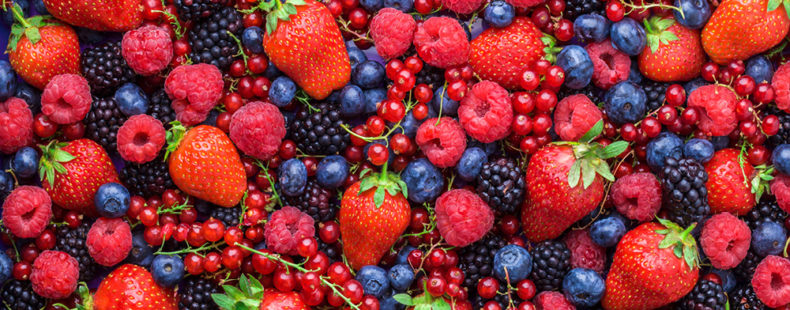
The berry family is a linguistic invention particular to Germanic languages, like English. Other languages, like Spanish and French, do not combine the wide, diverse berry family into one group, but rather have very different words for blackberries, raspberries, blueberries and strawberries. The word berry comes from the Old English berie, which originally meant “grape.” As the English language spread to the Americas with colonization, many native grape-shaped fruits that grew in bunches took on the berry suffix: blueberry, cranberry, elderberry, etc. Though the many small, delicious fruits known as berries were grouped together in a linguistic accident, they are in fact many biologically distinct plants and fruits.

A botanist would probably tell you that grouping berries together is about as accurate as calling dolphins, tadpoles and squid “water creatures.” True berries are simply fruits in which each fruit comes from one flower, like blueberries. Even cucumbers and tomatoes are technically berries! Botanically speaking, blueberries (Latin family: Ericaceae) are more closely related to rhododendrons than they are to raspberries. Strawberries (Latin family: Fragaria) are called accessory fruits by botanists because they grow from parts of the plant other than the flowers. Raspberries and blackberries (Latin family: Rubus) are another example altogether. They are called aggregate fruits because their flowers form drupelets instead of one whole fruit. Drupelet is the technical word for the individual morsels of blackberries and raspberries. Fruits in the Rubus family are also called bramble fruits because they grow on spiky bushes.

Grapes, by the way, are technically berries. But where did the word grape come from? In Old English grapes were called winberige, literally “wine berry.” The word grape comes from the Old French word graper, which came from the word krappon, the hook used to pick grapes. In English, the tool became synonymous with the fruit in 1300s. (What other food words have morphed in weird ways? The history of the “hot dog” may gross you out, and the origin of egg is not to be missed.)
Сайт знакомств
Luckily, the erroneous linguistic grouping of “berries” gave us great treats like mixed berry ice cream, which may confuse botanists and non-Germanic language speakers.

EPA REGION 7 COMPLETES 10,000TH RESIDENTIAL YARD CLEANUP OF LEAD-CONTAMINATED SOILS AT OMAHA LEAD SITE IN OMAHA, NEB.

US Fed News Service, Including US State News December 17, 2011 KANSAS CITY, Kan., Dec. 15 — The Environmental Protection Agency Region 7 office issued the following news release: this web site city of omaha

Representatives of EPA Region 7, the State of Nebraska, the City of Omaha, Douglas County, Neb., and local residents gathered today in Omaha to celebrate EPA’s completion of its 10,000th cleanup of toxic lead from residential yard soils in the city, a milestone in the Agency’s continuing work at the Omaha Lead Superfund Site.

Under the authority of the Superfund program, EPA has been working in Omaha since 1999 to identify and remove lead from residential properties, as well as public parks, playgrounds, and child care facilities. To date, the Agency has sampled more than 39,000 properties in Omaha, and – as of October 23, 2011 – completed the cleanup of its 10,000th residential yard.

Approximately 4,100 properties with elevated levels of lead in soils remain to be cleaned up to complete EPA’s work at the nation’s largest residential lead remediation site. Aided by favorable weather, long outdoor construction seasons and a continued record-setting work pace for soil remediation, EPA and its contractors anticipate that the job could be completed by 2015.

“EPA’s successful work in Omaha has kept families healthier, secured property values in the city’s heart, and provided valuable job training,” EPA Regional Administrator Karl Brooks said. “This agency has worked productively with a range of local partners for over a decade to get the lead out of Omaha, and we’re staying on task until we’ve finished our job.” Brooks today joined Nebraska State Sen. Brenda J. Council, Omaha Mayor Jim Suttle, Douglas County Health Director Dr. Adi Pour, other state and local officials, and several property owners at a news conference at the Omaha-Douglas Civic Center to mark the 10,000-yard milestone.

The EPA Regional Administrator noted that the lead cleanup’s main objective, to protect current and future generations of Omaha’s children from health hazards associated with lead poisoning, has already proven to be a success. The percentage of children in eastern Omaha tested with elevated blood lead levels has been reduced from nearly 33 percent prior to 1998, to less than two percent today.

The cleanup is also paying significant economic benefits, Brooks said. To date, EPA’s total investments of $247.9 million at the Omaha Lead Site have contributed to community revitalization and redevelopment, improvement of property values, local employment and economic growth.

EPA contracts have provided more than $61 million in spending so far on local materials and local labor, adding about 300 high-paying ($23 to $30 per hour) seasonal jobs to the local economy for each of the past four years. EPA has also awarded $500,000 to a cooperative agreement with the Omaha Metropolitan Community College to provide job training and certifications to local workers, helping to build a skilled labor force to assist in the cleanup, and for future employment beyond the site. see here city of omaha

EPA’s related investments in Omaha’s public health education and protection include cooperative agreements of $9.7 million to the City of Omaha for paint stabilization and database development, $3.9 million to the Douglas County Health Department for interior home assessments, $205,000 to the Nebraska Department of Environmental Quality (NDEQ) to support its work at the Omaha Lead Site, and a $50,000 technical assistance grant to the Lead Safe Omaha Coalition.

Today, Regional Administrator Brooks thanked those departments, agencies and groups, along with numerous neighborhood organizations – and the people of Omaha – for working cooperatively with EPA on the continuing cleanup.

EPA’s Omaha mission dates back to 1998, when the Omaha City Council solicited the Agency’s assistance in addressing problems with lead contamination in area soils, prompted by cleanup activities at the former ASARCO lead smelter along the west bank of the Missouri River.

From the early 1870s until it closed in 1997, the ASARCO plant emitted lead and other heavy metals into the atmosphere from smoke stacks and fugitive emissions. Those pollutants were carried by wind and deposited on the ground across eastern Omaha for more than a century. Over time, soils around many residences have also been contaminated with lead from the flaking and deterioration of lead-based exterior paints.

Lead in surface soils poses a serious health risk to children six years of age and younger, and to pregnant women. Lead poisoning can result in learning and behavioral problems, hearing problems, diminished IQ, and kidney damage. EPA also classifies lead as a possible cancer-causing agent.

Parents are urged to have children six years of age and younger tested for lead each year. Testing is available through most local family physicians, and from the Douglas County Health Department. For any query with respect to this article or any other content requirement, please contact Editor at htsyndication@hindustantimes.com Chris Whitley, 913/551-7394, 816/518-2794, whitley.christopher@epa.gov

Author: Hot Word | Posted in etymology, language | Tags: apples, berries, grapes, strawberries
105 Comments
OLH064 on October 13, 2011 at 5:13 pm

Nice, but what’s a mulberry?

Kathleen on October 13, 2011 at 8:43 pm

Yum. :)

Emilia on October 13, 2011 at 9:00 pm

Thats a nice artical

testees on October 13, 2011 at 9:57 pm

And what about dingleberries?

patsyannfrisby on October 13, 2011 at 10:34 pm

L Love all kinds of berries , I can put the berries in al kinds of foods .

Andrea on October 13, 2011 at 10:35 pm

A mulberry is a fragile fruit which grows on the mulberry tree.
The female tree needs a male tree in close proximity so that it
can bear fruit. Never have seen mulberries sold at regular
grocery stores because they whither so very quickly.
Deer and squirrels LOVE them! They also will dye your hands
a fiesty color of purple – as well as clothes, etc.
ps: “artical” is spelled ARTICLE : )

lizzy on October 13, 2011 at 11:05 pm

lol nice testees!!!!!!!!!!!! :D Great article!!!!!! Come to this site EVERYSINGLE-years. Jk I come to this website every single day just for dis kind of stuff!!! Keep up the good work guys!!!!!!XD

Eyewitness on October 13, 2011 at 11:33 pm

“The berry family is a linguistic invention particular to Germanic languages, like English. Other languages, like Spanish and French, do not combine the wide, diverse berry family into one group, but …”

I would hope the editors of The Hot Word Blog to have sufficient confidence in their readers to refer to Spanish and French not as “non-Germanic languages,” but by their proper classification, “romance languages.”

ONICA on October 13, 2011 at 11:59 pm

berries!!! YUM . . . :)

Archon on October 14, 2011 at 12:25 am

@ OLH064

Mulberry is the edible collective fruit of any of the trees of the genus Moros, or any tree of the genus. It’s the plant that silkworms eat the leaves of. I have one in my back yard, sadly with no silk.

@ testees

Ooh what a post name! And you want to discuss dingleberries? You’re just talkin’ dirty. Be careful or Papa Censor will kick you right in your submission.

Hannah on October 14, 2011 at 1:40 am

odd… One more example of how arbitrary language is!

Chantal on October 14, 2011 at 5:16 am

:D yummy

Chantal on October 14, 2011 at 5:16 am

:P

Chantal on October 14, 2011 at 5:17 am

3:)

BERRIES | BLOGCHI@mayopia.com on October 14, 2011 at 5:18 am

[...] ‘Berries’ vary very much: — So it seems what you are saying. — Eggs and hot dogs don’t seem to touch, — on the scale that is surveying. — So much information with subtext out of sync. — Berries, Juice and Spill the Wine, Spo-Dee-O-Dee.– So much to eat and strained to drink. – Eggs and hot dogs? What chu think? –>>L.T.Rhyme This entry was posted in DICTCOMHOTWORD, L.T.Rhyme and tagged LT, LTRhyme, the HOT WORD by admin. Bookmark the permalink. [...]

robert on October 14, 2011 at 5:42 am

Thank you, testees, for brightening a dreich day in Glasgow with that comment. Induced more than a slight chuckle.

David on October 14, 2011 at 6:01 am

Stawberries don’t grow from the flowers? That seems wrong, but what do I know…

David on October 14, 2011 at 6:02 am

*strawberries* – sorry

my new name is Adam on October 14, 2011 at 6:25 am

My favorite berry is a Halle Berry. Absolutely delicious.

Rico KG on October 14, 2011 at 6:54 am

:)

A-18-K on October 14, 2011 at 6:59 am

@OLH064
A mulberry is a berry that comes from a tree. They look sort of like blackberries, but I think they taste a little better and they’re sweeter. Also the individual sections over mulberries are smaller than on blackberries. The trees don’t have any thorns on them. I think when it comes to picking them they’re a whole lot more convenient and better; the only downside to them is that when you pick them, the tiny green stem comes along – so if you don’t wanna eat stems (you can’t taste the difference though) you gotta pull the stem out. They’re great for making pies! But it just takes time to pick enough and pull or cut all the stems out. My sister makes the greatest mulberry pies – but she likes to get me to do the stem cutting. :P

Kiki on October 14, 2011 at 7:17 am

lol ^^^

lezza on October 14, 2011 at 7:25 am

It seems like the last few times I found a new blog on this site with only a few comments, I posted a comment and was listed as the second or third person, and then the next day my comment was listed as one of the last few posted, way beyond the comments mine originally appeared by. Right now I only see four comments, so this should be the fifth or sixth, but somehow I doubt it. I wish I could look through all the comments before I post one so that I don’t end up saying the same thing as someone else, and because I enjoy reading others’ comments and replying to them.

Eric on October 14, 2011 at 7:28 am

Mulberries are what bears eat before they attach you.

jojo on October 14, 2011 at 7:31 am

nice

jojo on October 14, 2011 at 7:32 am

very educationall

Charlie on October 14, 2011 at 7:34 am

No comment!

hewhosaysfish on October 14, 2011 at 7:35 am

Wait, so “berry” comes from “berie” the Old English word for “grape”…
but the Old English word for “grape” is “winberige”… which means “wine berry”.

So if I want to refer to a grape in Old English, do I call it a “berie” or a “winberige”?
And if I want to refer to a berry, is it a “berie” or a “berige”?
I’m so confused!

Rabeeta on October 14, 2011 at 7:40 am

It was really informative. I always thought all these berries are one family. Good one.

gaylafay on October 14, 2011 at 7:50 am

A dingleberry, if using the info in this article, would be an accessory fruit.

Clear on October 14, 2011 at 7:58 am

Woah woah woah! Never lernt this or rad this any where except for here! Awwwww I HAVE TO LIVE UP TO MY NAME AS A SCIENCE GEEK! * researches even more*

ras on October 14, 2011 at 8:03 am

hi

Bob Beazley on October 14, 2011 at 8:27 am

That’s all berry nice.

John on October 14, 2011 at 8:42 am

“The word berry comes from the Old English berie, which originally meant ‘grape.’”
“In Old English grapes were called winberige, literally ‘wine berry.’”

Wacky.

Also, strange that the tool for picking a fruit was named before the fruit it was invented to pick was named!

Daniel on October 14, 2011 at 9:13 am

What about snozberries?

Blueberry on October 14, 2011 at 9:16 am

Does “cherry” have any relation to “berry”?

Ptron on October 14, 2011 at 9:52 am

How berry exciting. Oh, come on, someone had to say it.

Ptron on October 14, 2011 at 9:54 am

Oh, Bob Beazley beat me to it. Oh well.

bob the bob killer on October 14, 2011 at 9:57 am

ballsacks

Mr. Raymond Kenneth Petry on October 14, 2011 at 10:15 am

Let us see whether we have this construct correct:

Berry < berige (y-grec) < egireb (semipalindrome) < grape grampe > egiremeb > bemerige (y-grec) > bemery.

And, What is that–?

Since the berry (familiar food) was the fruit cut off with a krappon,
The bemry (unfamiliar food) should be the fruit cut off with a krampon,…

But, The krampon we know from mountain climbing and particularly icy,
So, The bemery should be chewing gravel, or chewable ice junks, available in many colors….

Mr. Raymond Kenneth Petry on October 14, 2011 at 10:18 am

This did not work: It left out a choice little piece of dialog and punctuation in the middle…

Trying once more, the middle piece was:

Don on October 14, 2011 at 10:44 am

Snozberries? Who ever heard of snozberries? Guess we’ll have to try the lickable wallpaper eh, Daniel?

ryan umland on October 14, 2011 at 10:54 am

another piece of trivia

Don on October 14, 2011 at 10:57 am

Oh. Yeah, I think cherries aren’t berries because they grow in trees. But don’t take my word for it.

And one last thing. I knew a tomato was a fruit but I didn’t know it was also a sort of berry. Buy where do you get a cucumber as a berry?

Cody on October 14, 2011 at 10:59 am

hehehehhehe ;)

Luke on October 14, 2011 at 12:07 pm

It is true that Romance languages have very different words for berries: mirtillo, fragola, and mora for blueberry, strawberry, and blackberry, respectively, in Italian.

However, there is a “berry” category. Italians refer to berries as “frutti di bosco,” literally “fruits of the woods.”

A. on October 14, 2011 at 12:18 pm

Daniel on October 14, 2011 at 9:13 am
What about snozberries?

THE SNOZBERRIES TASTE LIKE SNOZBERRIES!

Zed Blues on October 14, 2011 at 12:31 pm

How is this different from “fruit,” “seafood” or “shellfish”? Lots of things are grouped together for convenience and not because of science.

Worst. Article. Ever.

Ish.

Agkcrbs on October 14, 2011 at 12:32 pm

Might as well make a list…

Here are a few of our “berry” words floating around (not including grapes and currants and so on, which are botanical berries):

Acai berry
Appleberry
Aronia berry
Baneberry*
Barberry
Bayberry
Bearberry
Bilberry
Blackberry
Bloodberry*
Blueberry
Boysenberry
Brambleberry
Buffaloberry
Bunchberry
Camu camu berry
Checkerberry
Chehalem berry
Chokeberry
Cloudberry
Conkerberry
Cowberry
Cranberry
Crowberry
Csejka berry
Daphne berry*
Deerberry
Dewberry
Dog berry
Elderberry
Emu berry
Falberry
Farkleberry
Foxberry
Gojiberry
Gooseberry
Ground berry
Hackberry
Hillberry
Holly berry*
Honeyberry
Houndberry
Huckleberry
Inkberry*
Ivy berry*
Juneberry
Juniper berry
Knoutberry
Lingonberry
Loganberry
Marionberry
Mede berry
Mistletoe berry*
Mulberry
Nana berry
Nannyberry
Olallieberry
Partridgeberry
Phenomenal berry
Pigeonberry*
Poisonberry*
Pokeberry*
Privet berry*
Quailberry
Raspberry
Redberry
Riberry
Rockberry
Rowan berry
Salal berry
Salmonberry
Santiam berry
Sarvisberry
Saskatoonberry
Scarlet berry*
Seaberry
Seabuckthorn berry
Serviceberry
Shadberry
Shallon berry
Sheepberry
Snakeberry*
Snowberry
Sparkleberry
Spiceberry
Strawberry
Squawberry
Sugarberry
Tayberry
Teaberry
Thimbleberry
Two-eyed berry
Ugniberry
Whortleberry
Wineberry (different from ‘winberige’)
Wolfberry
Yew berry*
Youngberry

Some of these are actually “drupes” (“stone fruits”, or pitted fruits, like cherries) or other things entirely. Many are also synonymous or overlapping in meaning, and most have a variety of sub-types.

Clearly, “berry” has been a productive fruit morpheme. You can potentially add it to any berry-making plant (particularly toxic ones *), and hybridisation and global commerce continue to expand the category. You’ll also find newish brand-type words like “razzleberry”, “wildberry”, “tazziberry”, and so on.

There’s another group of “-berry” words used for place names and surnames (e.g., Mayberry, Newberry), related not to fruit but to ‘burg’, ‘borough’, ‘barrow’ (meaning roughly “town” and originally “hill”) and even to ‘burrow’, ‘bury’, and ‘borrow’.

Anyway, some items like “Thornberry” can seem unclear as to whether they’re forgotten fruit names or locational surnames; but if people do use them as names, I’d lean toward the latter. Then again, all it takes are a few farmers or marketers adopting the place name for a plant and, presto, it’s another berry.

Cayl on October 14, 2011 at 12:33 pm

Snozberries only appear on wallpaper… unfortunatly. They’d probably taste good.

@Blueberry
Cherries are not berries, I think. I think it was something about having a large pit-like seed instead of lots of smaller seeds, or something like that.

Agkcrbs on October 14, 2011 at 12:40 pm

Oops; plant or flavour.

sherryyu on October 14, 2011 at 1:49 pm

kool i never new that, can u include,how cucumbers and tomates were once called berries and when n how did they change it.

sherryyu on October 14, 2011 at 1:49 pm

i meant why

Carl on October 14, 2011 at 2:06 pm

I like David’s 10-14-11 comment “Stawberries don’t grow from the flowers?…..”, where he later corrects himself “Strawberries”. When I read “Stawberries”, I immediately pictured Elmer Fudd saying that, then giggling, just before he set out to shoot some “Wabbits”!

Cutieputootie on October 14, 2011 at 2:26 pm

Nice to know! :)

Cutieputootie on October 14, 2011 at 2:27 pm

<3

.com on October 14, 2011 at 2:41 pm

@ Andrea, What do you mean male/female trees? ???

SylviasDaddy on October 14, 2011 at 4:23 pm

@OLH064: A mulberry is an aggregate fruit similar in appearance to a blackberry or raspberry.

@Eyewitness: Perhaps when the author referred to non-Germanic languages (strictly speaking, non-Teutonic languages), he also referred to Slavic languages and others which are neither Teutonic nor Romance.

@Don: A cherry is a drupe, because it has a pit. Other drupes include peaches and plums. True berries have the seeds scattered throughout the flesh, like tomatoes and watermelons. A fruit with a core, such as apples and pears, is a pome. A fruit with a hollow center and seeds in a slippery matrix, such as pumpkins and cantaloupes, is a pepo. A citrus fruit is a hesperidium.

SylviasDaddy on October 14, 2011 at 4:24 pm

@.com: A male tree produces pollen, but does not have flowers to receive it. A female tree has flowers to receive pollen, but does not produce pollen.

sky on October 14, 2011 at 5:34 pm

What a good good read :)

viru on October 14, 2011 at 7:22 pm

mulberry is shahtoot

Uh-oh I forgot my parachute on October 14, 2011 at 7:59 pm

BLOGCHI is a bot that needs to be banned.

Luck in W on October 14, 2011 at 9:11 pm

I had no idea that there is so much interesting information about our sort-of berries, both biologically and etymologically.

There are certainly many more berries–whether legitimate or not–than I’ve ever heard of, never mind seen or eaten.

My favorites are raspberries, strawberries and blueberries. I also love wild strawberries, though I haven’t seen or tasted them in about 50 years. I love the ones with at least a hint of tartness, definitely not the cloyingly sweet ones.

Ehmmy on October 14, 2011 at 10:47 pm

Good job

George Zadorozny on October 14, 2011 at 11:11 pm

Regarding berries, here is the delightful closing song to the 1980 animated TV special “The World of Strawberry Shortcake,” written by the wonderful Romeo Muller, who wrote all the very greatest Rankin-Bass Christmas and holiday specials, including the celebrated “Rudolph, the Red-Nosed Reindeer,” “Frosty the Snowman,” “Santa Claus Is Comin’ to Town,” “The Leprechaun’s Christmas Gold,” and many more. Go to the Rankin-Bass website’s Spotlight section for a filmography and a biography of this splendid writer.

In the following duet (lyrics by Romeo Muller), “S” stands for Strawberry Shortcake, and “P” stands for her just-converted-to-goodness erstwhile nemesis, The Peculiar Purple Pieman of Porcupine Peak.

The YouTube link is:

http://www.youtube.com/watch?v=cCM62B6b50U&feature=related

This gives the last 6 minutes and 22 seconds of the show, and the closing song begins at the 3:51 minute mark. However do yourself a favor and watch the whole show!

========================

P: (speaking): Oh! You–you said “berry” again!

S: Uh-huh!

P: Why must you keep saying—BERRY?

S: (singing): It’s fun to say berry!

P: (singing): Fun to say berry?

S: I berry talk all the day through . . .

P: If you could just teach me,
Perhaps you could reach me!
I’d like to berry talk too!

S: Okay, I’ll show you how!
P: Goody!

S: If a day is real hot, it is berry hot;
And if it is cold, berry chilly;
If a book is real long, it is berry long–

P: And if it is short–oh I feel silly!

S: Oh no, don’t feel silly!
But you didn’t say berry–

P: I tried to say berry–
My mouth won’t do as it’s told . . .

S: Well listen to berries,
I’ll sing some more berries,
On berry talk you must be sold!

P: Oh pretty pumpkins!

S: Like to ride ‘cross the stream on the Berry Boat–

P: Her berries are extra-ordinary–

S: And what do I see
When I turn on TV?
My favorite cartoon, Tom and Berry!

(both laugh)

P: Incredible berry!
A berry fine berry!

I did it! I know what to say!
You better stand far back,
I’m just gonna roar back,
And berry talk all of the way!

S: Okay, now you do it!

P: On Halloween night I am berry scared–
The berry bad guys I can’t dismiss;

And what do I say
On Christmas Day?

S: With a berry?

P: Yeah! Berry Christmas!

S: Oh wonderful!! You’ve learned to say berry!

P: Oh I love to say berry!

S: Then I’ll be your berry good friend . . .

P: We’ll berry together,

S: In all sorts of weather,

Both: Berry good friends to the end . . .

We’ll berry together,
In all sorts of weather,
Berry good friends to the end!

Archon on October 14, 2011 at 11:54 pm

@ lezza

Once you complete your post and submit it, it presents at the end of the page that you have downloaded, and seems to be the next in line. However, while you’ve been doing that, several other people have also been submitting. All submissions are held in a cache at D.com until they are cleared by a tech as acceptable to be added to the thread. They can’t be insulting or profane, etc. Once they’ve been cleared, they are added to the active page in chronological order. Depending on how active a thread is, what time of day you submit and how long between the time you downloaded the most recent iteration, and the time you submitted, you may be the next post or you may be way down the page. You have to leave your version of the page and re-enter the active one to find out where you land. Carlitos and I, and a couple of others have had posts disappear into cyberspace for various reasons. They were there when we left but not when we got back. Sometimes only an offending portion disappears, see Mr. Raymond Kenneth Petry above at 10:15, Oct. 14.

As I post this, .com on October 14 at 2:41pm is the last post above my submission. @ Andrea, What do you mean male/female trees ? ???
Let’s see where I land. If nobody else does, I’ll answer his question.

Ryuu on October 15, 2011 at 12:38 am

True, buuut… a true botanist would also tell you that strawberries do not belong to the Fragaria family (Fragaria is the genus’ name), and raspberries are not part of the Rubus family (again, genus’ name); in truth, they both belong to the rose family (Rosaceae). Blueberries, cranberries, bilberries and lingonberries, among others, do belong to the Ericaceae (and, indeed, to the same genus: Vaccinium).

If you’re writing articles commenting on scientific details, double-check your science as well, please!

innocent.love on October 15, 2011 at 4:10 am

I love berries soo much..<3 =)

Pat on October 15, 2011 at 4:16 am

In accordance with the explanation above, mulberries are drupelets (like rasp- and blackberries).

And speakeing about grapes, how come a citrus came to be called grapefruit?

Pat on October 15, 2011 at 4:22 am

@ .com, female trees yield flowers with only female organs and male trees yield male flowers. Some plants (not just trees) bear either female or male flowers in one plant. The technical term for these is dioicous.
For example, if you have just one kiwi tree in your orchard, it is unlikely to produce. Unless it be a female and your neighbour has planted a male kiwi tree.

David C Coffin on October 15, 2011 at 6:39 am

Getting hungry looking at the dictionary, gotta be something wrong with that.

Clear on October 15, 2011 at 8:22 am

Woah agkcrbs thats an interesting list you are making!
@.com: female trees are trees that bear flowers with only stigma and ovary as their reproductive system. Male trees are those that bear fowers with anther as the reproductive system. The pollen from the anther will get transported to the stigma by either wind or animal and this has a hugher rate of success if trees with both gender are close to each other. .com hope this helps! :D

JAC on October 15, 2011 at 8:46 am

And Andrea FYI whither means a place. The word you are trying to use is spelled wither. Thought you’d like to know since you corrected someone else’s misspelling.

jess on October 15, 2011 at 8:46 am

cool

AlphaProofing on October 15, 2011 at 9:39 am

It’s always interesting how words develop and their meanings change throughout history and their introduction to new peoples. Morphology could keep me entertained for days – always something to learn.

Jesse on October 15, 2011 at 11:01 am

nice

Reginaldo on October 15, 2011 at 11:07 am

Very interesting article. I love berries, too and have a mulberry tree in the backyard. Mulberries make delicious pies!

Navi on October 15, 2011 at 12:04 pm

Interesting how the word berry came from grapes but grapes aren’t beries

Cyberquill on October 15, 2011 at 12:11 pm

Funerals where people bring berries instead of flowers are called berrials.

Reggie on October 15, 2011 at 12:40 pm

An Informative & Nicely done article, Kudos!

Peace!

Noob on October 15, 2011 at 2:51 pm

IDC wat berries name r i just like them

yayRay Shell :) on October 15, 2011 at 3:01 pm

That’s cool to know!

Andrew on October 15, 2011 at 8:51 pm

Good article. Just can someone now explain to me the relation of graper to krappon? I realize people saying krappon is derogatory. Still nowhere can this transition be found. Looking up both words here at the site provided no clues at all.

Rahul on October 16, 2011 at 1:56 am

a berry…very good article

john rhea on October 16, 2011 at 2:08 am

@testees- actually dingleberries are synonymous with the word krappon, the hook used to pick grapes.

john rhea on October 16, 2011 at 2:12 am

@George Zadorozny- you have way too much time on your hands.

Sent from my BlackBerry

JB on October 16, 2011 at 4:27 am

So why does German have “Beere” (Blaubeere=Blue berries; Erdbeere; strawberries)? If this is a result of people moving to America, did Americans then go to Europe and impact German?

Cranberries is also an odd one.

kati on October 16, 2011 at 5:05 am

its agood artical.now i know more about berries

Alex Anderson on October 16, 2011 at 5:14 am

Actually, forgive me for stating the obvious, but the grape is not an indigenous fruit of the UK (hence massive importation of wine from France, Italy, Portugal and the New World), unlike the raspberry, the gooseberry, the blackberry and the black current, so I disagree, I don’t think that the word ‘berry’ means ‘grape’ at all.

john rhea on October 16, 2011 at 10:01 am

@alex – you do realize by disagreeing, you will be banned from this site?

@Ryuu – I think you are getting a little too upset. Who cares? And stop hurting the dogs.

Vikhaari on October 16, 2011 at 10:14 am

Ohhh how I like the article. berry, berry, berry nice. And it’s oh so berry informative!
Enjoyed reading comments too, berry good.
Thank you berry much.

KOOL-AID... NOT Caprisun on October 16, 2011 at 6:33 pm

Whoa.. I never expected grape to be the “original” berry. Although it would make a lot of sense..

Annette on October 16, 2011 at 8:35 pm

Very interesting. Now can we please get an article about the difference between vegetables and fruit?

Svenjamin on October 17, 2011 at 3:19 pm

@Agkcrbs – You’ve made a nice list, however, I don’t think it’s complete without the:
Chuck Berry
Barry White
Lie Berry

Lefty on October 17, 2011 at 6:56 pm

I don’t know what I like to ready more the article or the comments that follow! Either way I enjoyed all of them bery bery much!

Lefty on October 17, 2011 at 6:59 pm

Opps I mean READ

Carlitos on October 18, 2011 at 6:26 pm

Who is Barry Lincoln and what are snozberries on wallpaper?

Lucille on October 19, 2011 at 4:10 am

Do you know that beri – beri is a disease in Philippines?
It is when you are missing some vitamins from the body and pressing the skin will leave red marks wich will not fade away for long time.

Malik on October 20, 2011 at 6:47 am

Did you know that the largest berry is a watermelon? Weird, right?

voodooDAL on October 21, 2011 at 12:51 am

eggplant is also considered as one of the berries ;)

A Cane Berry Patch Backyard | Glenns Garden on October 22, 2011 at 5:24 am

[...] [...]

Vikhaari on October 22, 2011 at 11:06 am

According to Dictionary.com. watermelon is of gourd family; gourd is cucurbitaceous family of plants, which are creeping plants bearing cucumber (hence, the name cucu… perhaps), pumpkins, squashes and the likes.
And eggplant “a plant, Solanum melongena esculentum,of the nightshade family, cultivated for its edible, dark-purple or occasionally white or yellow fruit,” says the D….com.
Thank you.

Julie, J.A.B.'s Freelance World on October 26, 2011 at 10:44 pm

This is a bit over my head, but I was fascinated that cucumbers and tomatoes could be considered berries per the original use of the word “berry.”

Unbelievable « sf49ersdotcom on November 25, 2011 at 1:17 am

[...] What are vegetables now? Well, that depends on who you ask. Botanists, nutritionists, government agencies and everyday people all hold contradictory opinions on the matter. Let’s take the example of two tablespoons of tomato sauce. We already know what Congress thinks of that, but what does the USDA recommended nutrition think of it? Tomatoes are part of the family of “Red or Orange Vegetables” which also includes squash, carrots and red peppers. Botanists would say that tomatoes are Solanum lycopersicum, and we technically eat the fruit of the plant. (Genetically speaking, the tomato is very closely related to the potato.) According to nutritionists anything from beets (which are roots) to spinach (which are leaves) to tomatoes (which are fruits) count as “vegetables.” They are typically rich in nutrients and low in fat and protein. The main difference between fruits and vegetables are that fruits are sweet (and higher in sugar) and vegetables are savory (and lower in sugar). Find out what makes a berry a berry here. [...]

sweet dictionelle on January 31, 2012 at 4:06 pm

congrats to testees for the first comment in the gutter

Leave a comment
Name
Email
Website

Copyright ©  2013 Dictionary.com, LLC. All rights reserved.
About PRIVACY POLICY Terms API Careers Advertise with Us Contact Us Suggest a Word Help