The nuptials of Chelsea Clinton and Marc Mezvinsky focus attention on the surprising history of some great words and attire: fuchsia, tuxedo, yarmulke, and more.
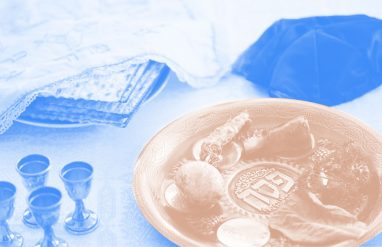
The groom, who is Jewish, wore a tallit and a yarmulke. A tallit is a shawl-like garment usually made from wool or silk. It has fringes, called zizith, at the four corners. It is worn during religious services or special occasions.
During traditional Jewish ceremonies, a tallit is sometimes used as a canopy over the couple. This doesn’t seem to be the case at Saturday night’s interfaith ceremony.
A yarmulke is a skullcap worn by Jewish men during religious services, study, prayer, and special occasions. Although the etymology of the word is debated, it is likely that it came from Yiddish, which adopted the word from the Ukranian and Polish yarmulka, meaning “cap.” Ultimately it may have had Turkish origins. The Turkish word yaǧmurluk means “raincoat.” The Hebrew-language equivalent kippah means “dome.”
Burberry creative director Christopher Bailey designed the groom’s tuxedo. Tuxedo got its name from the country club in Tuxedo Park, N.Y. where the suit was first worn in the late nineteenth century.
The mother of the bride wore a striking fuchsia dress. This bright, crimson color shares its name with a plant of the evening primrose family and was named after a Leonhard Fuchs, a German botanist.
At the Friday evening rehearsal dinner, Hillary Clinton wore a glamorous, turquoise caftan, or kaftan. While this style has been popular with Western women for decades, it is also the name of the long-sleeved garment worn under a coat in the Middle East. The word has Turkish, Arabic, and Persian roots.
Last but hardly least, the bride wore a strapless silk organza gown with a draped tulle bodice and an embellished belt. As suspected, the wedding dress was designed by Vera Wang.
The couple is expected to honeymoon soon. The history of the word, however, is not as sweet as it sounds. Read more here.
I do not know too much about either wedding or its related matters, however, the thing that interests me is that the broom was mentioned a Jew. I know some people with interfaith marriage including Jews. What differenciates the broom from the bride? Does he practice the Jewish religion, which quite different from the Clintons’ life style? I gusess he is not pro-Palestina. Years ago I watched the TV show and Golden Hawn was on it and introduced as a Jew but a Christian, and she seemed to be very proud of being a Christian. I have nothing against what people believe in and what religion whatever. Because faith is the last bastion to be saved, but I just wonder how long it can stand. I suppose it would last as long as one is as good as senile. I never got married before institutionally, but it usually get messy. The first thing one has to do in getting married is to get one’s head straight.
What denomination is Chelsea? Is she baptist? I have no idea. Pettybear, the word is groom, not broom (since we’re on the dictionary website).
[...] CAFTANS AND TALLITOTS and FUSHIA TUXEDO. — TALLIT and YARMULKE and ZIZITH torpedo. — SKULLCAPS and RAINCOATS and somewhere broken glass and cake — these are the thing that some “traditional” distracting nuptials take. — Wishing them pleasure and a good life together — it’s none of our business if in private they wear leather. — We know there’s a Chelsea and a MEZVINSKY on a “HONEYMOON” to go — just leave Bill at home and to Hillary the show.–>>Rupert L.T.Rhyme [...]
Now with the jewish relation the future for the Clinton dynasty is assured!
great comments, esp. by rupert l.t. rhyme
mazal tov !!!
Tut tut, removing my comment just because you know I am correct.
for NewMomsNearby and anyone who cares: heard on CNN that Chelsea is a Methodist – no mention yet if she is converting or how any kids might be raised and to WORD OF THE DAY:
Heck, I got cut off before I could finish – I meant to say that I’d have no clue what these religious terms mean if not for WOD. Love Dictionary.com!!!
Skull cap is also used in India which has a varied culture.
It is called pugree, muretha, paag…depending upon the region, caste,tribe etc.
Actually, the word for the fringes” on the “tallis” is “tzitzit” (if you speak Sephardic Hebrew) or “tzitzis” (if you speak Ashkenazic Hebrew, as I do). The spellings “yarmulka” and “yarmulke” are interchangeable, though one is used more by older eastern European Jews who speak Yiddish. Oh, and “tallit” is Sephardic, while “tallis” is Ashkenazic.
Sephardic refers to western Europe and North Africa; Ashkenazic refers to a region of Europe called “Ashken,” which would include Poland, parts of Russia, etc.
The fringes on the talit are tzitzis or tzitzit. Neither Askenazic or Sephardic pronunciation of Hebrew would use a “th” at the end of this word.
http://dictionary.reference.com/browse/tzitzis
Additionally, Orthodox men wear a yarmulke at all times.
you can see these kippot at http://www.skullcap.com
it may have had Turkish origins. The Turkish word yaǧmurluk means “raincoat.” The Hebrew-language equivalent kippah means “dome.”
Burberry creative director Christopher Bailey designed the groom’s tuxedo. Tuxedo got its name from the country club in Tuxedo Park, N.Y. where the suit was first worn in the late nineteenth century.
To add on to Michael’s comment, the plural of tallit (or tallis, as I say it) is not “tallitot” (“tallisos”). It is “talleitim” (“talleisim”). “-im” is plural for masculine words, “-ot” (“-os” in Ashkenazic pronunciation). Please do your research, Dictionary.com
To Michael and david h:
I think the use of “th” is a good idea for the taf/saf. It’s not as soft as the Ashkenazic ‘-s-’, while not as hard as the Sephardic ‘-t-’. I think it’s a fair compromise.
To Michael:
Actually, “Ashkenaz” is Hebrew for “Germany” (more precisely, the Rhineland) and refers to the descendants of the Rhenish Jews. “Sepharad” means “Spain” and refers to the descendants of Iberian communities.
Click & Earn:
According to Jewry, “yarmulke” is a contraction of “yored m’malka” – “down from (below) the King (God)”. The purpose of the kippah in Orthodoxy is as a constant reminder that God is above the wearer.
David
well written blog. Im glad that I could find more info on this. thanks
Great site. A lot of useful information here. I’m sending it to some friends!


Awesome! Great post….
Can someone enlighten me as to the name of skullcap, which is similar to yarmulka, worn by Muslims? Is it also called ‘yarmulka’?