The history of the term diaspora shows how a word’s meaning can spread from a very specific sense to encompass much broader ones.
Diaspora first entered English in the late nineteenth century to describe the scattering of Jews after their captivity in Babylonia in the fifth century B.C.E. CONTINUE READING »
By Jane Solomon
A couple weeks ago Anne Curzan wrote an article for the Lingua Franca blog about new slang uses of the word slash. This article particularly interested me because I, like her students, have been using the slash in these ways for the last five-plus years. As a linguist slash huge nerd, the first thing I did after reading Curzan’s article was search my personal corpus of Google Chat logs for real-life examples of these new usages of slash.
CONTINUE READING »
At the turn of the 17th century, dogma entered English from the Latin term meaning “philosophical tenet.” The Greek word from which it is borrowed means “that which one thinks is true,” and comes ultimately from the Greek dokein which means “to seem good” or “think.” CONTINUE READING »
Before it was a military term, camouflage was French street-slang popular among pickpockets and other shadowy figures in 1870s Paris. A combination of the Italian word camuffare (to disguise) and the French word camouflet (puff of smoke), this word described a common practice among thieves: CONTINUE READING »
In a 1923 interview Zelda Fitzgerald told a reporter that she loved her husband’s “books and heroines,” especially the heroines who were like her. She explained that she liked girls like Rosalind Connage, a character in F. Scott Fitzgerald’s 1920 novel This Side of Paradise, because she admired “their courage, their recklessness and spendthriftiness.” She continues: “Rosalind was the original American flapper.” CONTINUE READING »
Echelon comes from the French échelon, a word whose literal meaning is “rung of a ladder.” Today the term applies generally to a level or rank of accomplishment or authority, but initially it was confined to military use in reference to a step-like formation of troops.
While echelon entered English in a military context, it was the first and second World Wars that extended the meaning to other nonmilitary sectors. During World War I, the term took on a more generalized sense of a “level” or “subdivision”; World War II broadened echelon’s usage to describe grades and ranks in professions outside the military. CONTINUE READING »
Hypochondriac comes ultimately from the Greek word hypokhondria, which literally means “under the cartilage (of the breastbone).” In the late 16th century, when hypochondriac first entered the English language, it referred to the upper abdomen. CONTINUE READING »
In light of a recent article about the birth of the word “fashionista,” we’d like to delve into the -ista suffix in hopes of understanding why English speakers combine it with certain words.
But first, let’s look at “fashionista.” This word first appeared in Stephen Fried’s 1993 biography of supermodel Gia Carangi. He invented it as a way to refer to the entourage surrounding supermodels at a photo shoot. The “fashion” portion of term is obvious. CONTINUE READING »
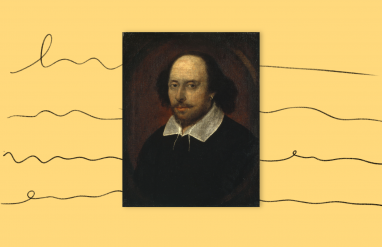
In honor of William Shakespeare’s birthday on April 23, we’d like to share some words popularized by the Bard himself. We hesitate to definitively say that Shakespeare coined the following terms. While that may be the case, it’s hard to know for sure that the list below contains terms invented by the beloved playwright. CONTINUE READING »
For a word that originates from the Greek term etymon, which literally translates to “true sense,” etymology certainly has a lot of untruth surrounding its existence since it entered English in the late fourteenth century. CONTINUE READING »